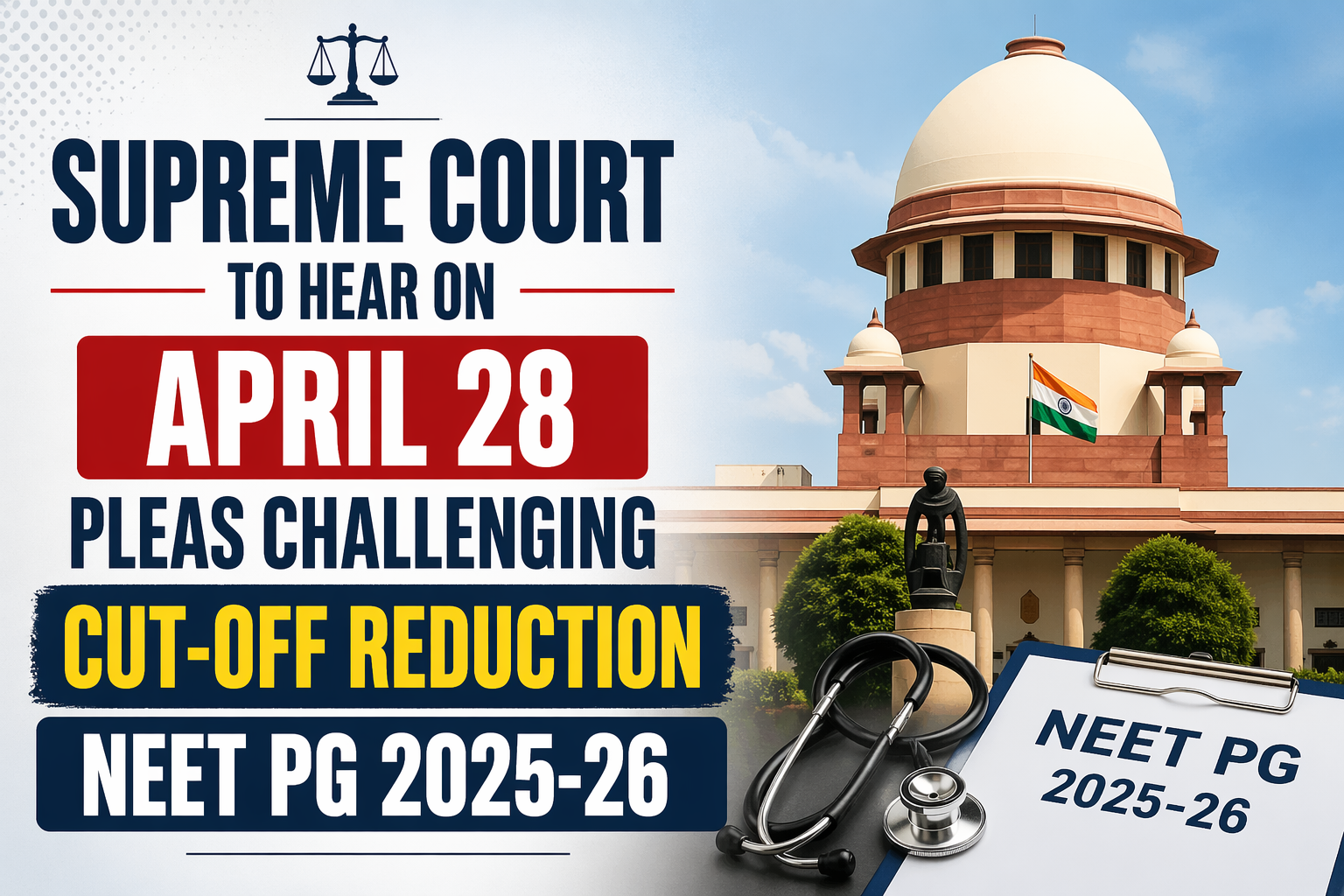
All legal pleas challenging the admission process, including the one seeking to reduce NEET PG 2025-26 qualifying cut-off percentile by up to 25 or more points, are pending before India’s Supreme Court of India. The April 28 hearing has created a stir among aspiring medicos, educators and policymakers nationwide.
The debate is whether reducing NEET PG cut-off sacrifices merit or it is a necessary evil to fill open medical seats in postgraduate courses.
Background Of The Cut-off Reduction Controversy
The NEET PG qualifying percentile was dropped by the National Board of Examinations that has given more candidates a chance to become eligible for counselling. However, this step has been a matter of contention among several candidates who have questioned the equity and quality of exams.
There are multiple petitions filed in the Supreme Court that have contended that such a slashing:
Dilutes the merit-based selection system
Affects deserving high-ranking candidates
It establishes a troubling precedent for future exams
Whether the ruling fits an ethos of constitutional equality and transparency is what next week’s hearing will address.
The Significance of the Supreme Court Hearing
The primacy of this issue lies with the Supreme Court of India. Its decision could directly impact:
NEET PG counselling rounds
Admission timelines
Cut-off policies in future exams
An adverse ruling by the court over reduction of cut-off might force a review of eligibility criteria, which could leave thousands of candidates preparing to appear for counselling in the lurch.
Impact on Aspirants
This turmoil has left NEET PG hopefuls a confused and anxious lot. Many students who had become eligible after the cut-off was lowered are now unsure if they’ll be admitted or not.
Meanwhile, high scorers feel that policy changes are sabotaging their efforts post-results.
Candidates can use tools like Neet Rank Predictor to understand their standing and plan accordingly under both scenarios.
Role of Regulatory Authorities
The National Medical Commission regulates medical education and admissions in India to provide transparency and ensure academic standards.
Globally, institutions like the World Health Organization play a key role in defining healthcare standards, indirectly shaping medical education systems.
The World Directory of Medical Schools ensures that medical degrees are issued by internationally recognized institutions.
Alternative Options for Students
With ongoing uncertainty around NEET PG admissions, many students are exploring alternatives beyond India. One popular option is pursuing MBBS in Georgia, which offers:
Affordable tuition fees
Globally recognized degrees
Modern infrastructure and clinical exposure
For students seeking quality education with less competition, studying abroad has become a practical pathway.
What to Expect on April 28
The April 28 hearing by the Supreme Court of India will likely address key questions such as:
Is the cut-off reduction justified?
Does it violate merit-based selection?
Should admissions proceed under modified criteria?
Legal experts suggest the court may either uphold the decision to fill vacant seats or reject it to preserve merit-based standards.
Petitioner Concerns About the Proposed Rule
Petitioners have raised several concerns:
Lack of transparency in decision-making
Policy changes after results declaration
Impact on candidate trust and fairness
These concerns highlight the broader debate between accessibility and maintaining academic excellence in competitive exams.
Conclusion
The NEET PG 2025-26 cut-off controversy has raised serious questions about fairness, transparency, and consistency in medical admissions. The final verdict by the Supreme Court of India will not only impact current counselling but also shape future policies.
Aspirants must stay informed and adaptable. Whether it’s analyzing performance through tools like Neet Rank Predictor or exploring global opportunities like MBBS in Georgia, being proactive is key in navigating the evolving landscape of medical education.