NEET 2017 AIR 1: Mental Health in Competitive Exams
The path to cracking the National Eligibility cum Entrance Test (NEET) is considered one of the toughest academic journeys for medical aspirants in India. Every year millions of students appear for the exam with the dream of getting admission into top medical colleges. While many students work hard, only a few extraordinary candidates achieve the highest ranks such as All India Rank 1 (AIR 1).
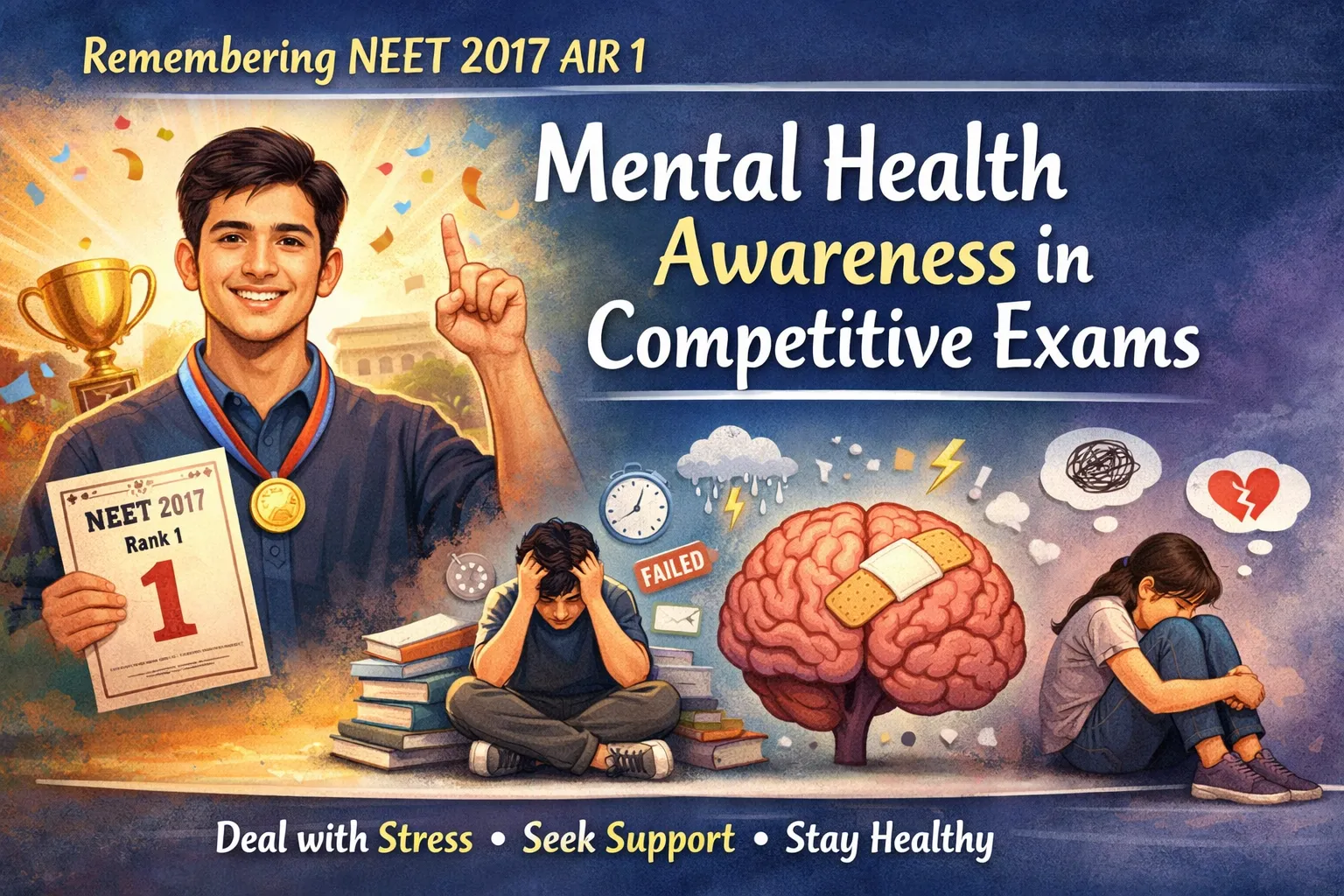
The story of NEET 2017 AIR 1 is not only about academic brilliance but also highlights the importance of mental health in competitive exams. Achieving such success requires dedication, discipline, focus, and emotional resilience—qualities that are essential during the preparation for a highly competitive exam like NEET.
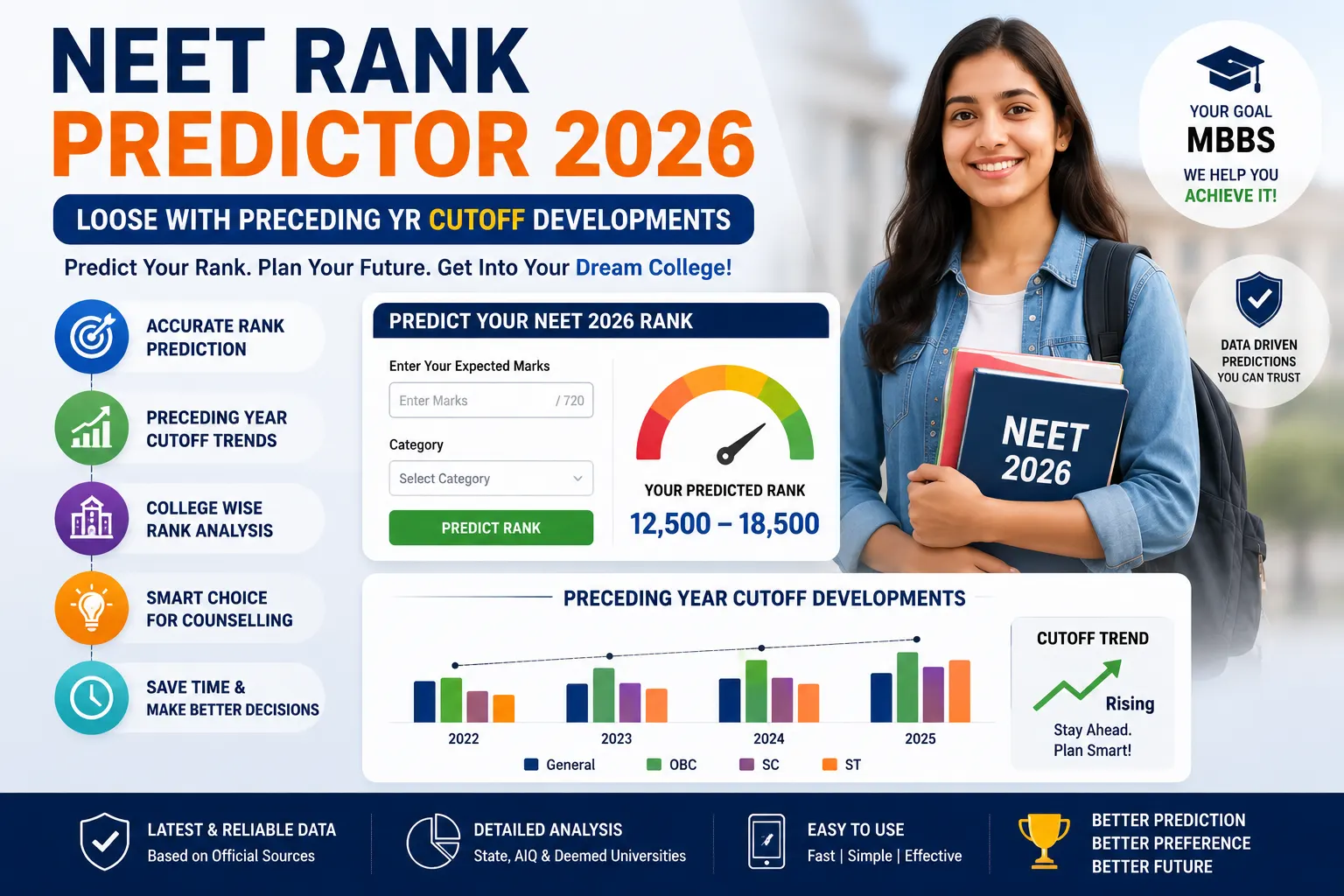
Today, many students also use tools like the NEET Rank Predictor to analyze their performance and estimate their expected rank. While such tools are helpful in evaluating progress, maintaining a healthy mindset throughout the preparation journey is equally important.
This article explores the achievement of NEET 2017 AIR 1, the mental challenges faced by aspirants, and why maintaining mental health during competitive exam preparation is crucial.
NEET 2017 Examination Summary
The NEET 2017 exam was conducted as a national-level entrance test for admission to MBBS and BDS courses in India.
Exam Structure
Physics – 45 questions
Chemistry – 45 questions
Biology – 90 questions
Marking Scheme
Correct Answer: +4 marks
Incorrect Answer: –1 mark
The total marks were 720.
To achieve AIR 1 in NEET 2017, students needed strong conceptual knowledge and consistent performance across all three subjects.
After the examination, many students calculate their marks and use a NEET Rank Predictor to estimate their expected rank.
Who Was NEET 2017 AIR 1?
The NEET 2017 AIR 1 was secured by Navdeep Singh, who scored an impressive 697 out of 720 marks.
His outstanding performance reflected:
Strong conceptual understanding
Consistent practice
Effective time management
Navdeep Singh’s success inspired thousands of medical aspirants across India. His preparation strategy demonstrated that disciplined study routines and focused preparation are key to success in competitive exams.
Even today, many aspirants refer to topper strategies such as that of NEET 2017 AIR 1 to guide their own preparation.
The Pressure of Competitive Exams
Competitive exams like NEET are extremely demanding and often create high levels of pressure among students.
Aspirants usually spend several years preparing through school education, coaching institutes, and self-study.
Common sources of stress include:
Fear of failure
High competition
Parental expectations
Long study hours
Uncertainty about results
While tools like the NEET Rank Predictor help students evaluate their exam performance, focusing excessively on ranks rather than learning can increase anxiety.
Therefore, maintaining a balance between academic preparation and mental well-being is very important.
Mental Health During NEET Preparation: Why Is It Important?
Mental health plays a crucial role in academic performance. Emotional stability and a positive mindset significantly influence students’ ability to handle competitive exams.
Improving Concentration
Stress and anxiety can reduce concentration levels. Students who maintain a calm and relaxed mindset can focus better on complex subjects like Physics, Chemistry, and Biology.
Practices such as:
Mindfulness
Short study breaks
Proper sleep
can help improve concentration.
Preventing Burnout
Many NEET aspirants study for long hours without sufficient breaks. This often leads to burnout, fatigue, and reduced productivity.
Maintaining a balanced daily routine helps students stay energetic and motivated throughout the preparation period.
Building Emotional Resilience
Competitive exams involve several challenges such as:
Low mock test scores
Difficult questions
Unexpected exam pressure
Students must learn to handle such situations without losing confidence.
Performance analysis tools like the NEET Rank Predictor can help students track their progress without becoming discouraged.
Maintaining Motivation
A positive mindset is essential for staying motivated throughout the long preparation journey. Stories of toppers such as NEET 2017 AIR 1 can inspire aspirants to stay focused on their goals.
Study Strategies Inspired by NEET 2017 AIR 1
Preparation strategies followed by top rankers can provide valuable guidance for future aspirants.
Consistent Practice
Top-performing students regularly solve:
Previous years’ question papers
Mock tests
Practice questions
This helps them understand the exam pattern and improve accuracy.
Conceptual Clarity
Successful students focus on understanding concepts deeply rather than memorizing formulas and facts.
This approach allows them to solve complex questions more efficiently.
Time Management
Time management is essential both during preparation and while attempting the exam.
Regular practice with timed mock tests helps improve:
Speed
Accuracy
Exam confidence
Regular Self-Assessment
Frequent self-assessment helps students identify their strengths and weaknesses.
Many aspirants evaluate their mock test results using a NEET Rank Predictor to estimate their expected rank.
Medical Education – Role of NMC, WHO, and WDOMS
After clearing NEET, students must carefully select their medical colleges. It is important to ensure that the institution is recognized by major regulatory authorities.
National Medical Commission (NMC)
The National Medical Commission (NMC) regulates medical education in India and ensures that medical colleges maintain high academic standards.
Graduates from NMC-recognized colleges are eligible to practice medicine in India.
World Health Organization (WHO)
The World Health Organization (WHO) plays a major role in global healthcare development and supports the recognition of medical education systems worldwide.
World Directory of Medical Schools (WDOMS)
The World Directory of Medical Schools (WDOMS) maintains a global database of recognized medical institutions.
Graduates from universities listed in WDOMS often have better opportunities to pursue international medical licensing exams.
Before selecting a medical college, students should ensure that the institution is recognized by NMC, acknowledged by WHO, and listed in WDOMS.
How to Take Care of Mental Health During NEET Preparation
Maintaining mental well-being during NEET preparation is essential for long-term success.
Maintain a Balanced Study Schedule
Avoid studying continuously for very long hours. Include short breaks to refresh the mind.
Get Proper Sleep
Adequate sleep improves memory, concentration, and overall health.
Exercise Regularly
Physical activity helps reduce stress and improves mood.
Stay Connected with Family and Friends
Talking to supportive people can provide emotional comfort during stressful times.
Focus on Learning Instead of Rank
Tools like the NEET Rank Predictor can help evaluate performance, but students should focus more on conceptual understanding rather than ranking pressure.
Conclusion
The story of NEET 2017 AIR 1 continues to inspire millions of medical aspirants across India. It demonstrates that success in competitive exams requires dedication, discipline, and strong conceptual knowledge.
However, achieving success in NEET is not only about academic preparation. Maintaining good mental health and emotional resilience is equally important during the preparation journey.
While tools like the NEET Rank Predictor help students track their performance, aspirants should also focus on regular practice, time management, and self-assessment.
After qualifying NEET, students must carefully choose medical colleges that are recognized by the National Medical Commission, acknowledged by the World Health Organization, and listed in the World Directory of Medical Schools.
By balancing academic preparation with mental well-being, NEET aspirants can confidently move closer to their dream of becoming successful doctors. 🚀