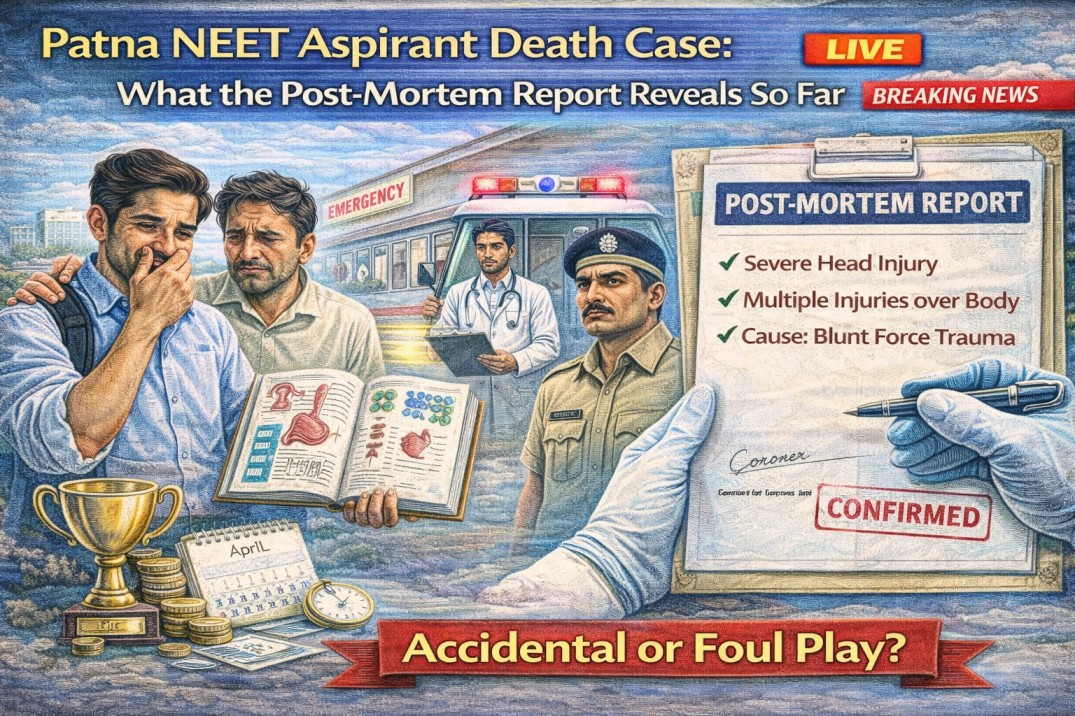
The tragic death of a young NEET aspirant in Patna has sent shockwaves across India, raising serious questions about student safety, investigation transparency, and institutional accountability. Initially believed to be a case of medical emergency or self-harm, the incident took a disturbing turn after the post-mortem report revealed findings that point toward possible violence, prompting public outrage and demands for justice.
The student was preparing for NEET UG, one of the most competitive medical entrance examinations in the country. Like thousands of aspirants, she had moved away from home to focus on her preparation, trusting the safety of hostel accommodation and local institutions.
Background of the Case
The aspirant was found in a critical condition in her hostel room and was rushed to a hospital, where she later succumbed during treatment. Initial statements suggested health complications or suspected consumption of medication. However, the lack of clarity and conflicting accounts from authorities soon raised doubts among family members and fellow students.
As pressure mounted, a detailed post-mortem examination was conducted to determine the exact cause of death.
Key Observations from the Post-Mortem Report
The post-mortem findings significantly altered the direction of the investigation. Medical observations indicated that the circumstances surrounding the death were more complex than initially suggested.
Major Revelations Include:
Multiple Ante-Mortem Injuries: The report noted injuries sustained before death, which are inconsistent with a sudden medical collapse.
Signs of Physical Struggle: Bruises and abrasions on different parts of the body suggested resistance, raising suspicion of external involvement.
Possibility of Sexual Violence: The post-mortem clearly stated that sexual assault could not be ruled out at this stage, necessitating further forensic analysis.
Contradictions with Early Medical Records: Initial hospital notes did not fully align with forensic findings, raising questions about early assessments.
These revelations transformed the case from a presumed personal tragedy into a matter of potential criminal negligence and violence.
Investigation and Administrative Response
Following the post-mortem report, authorities intensified the investigation. A special probe team was constituted to re-examine every aspect of the case, including hostel security, medical response, and possible lapses in protocol.
The case has highlighted gaps in student safety mechanisms, particularly for young aspirants preparing for high-pressure exams like NEET UG, which operates under academic frameworks aligned with the National Medical Commission (NMC).
Student Safety and Institutional Responsibility
This incident has reignited debates about:
Safety standards in private hostels
Accountability of coaching hubs
Emergency medical response systems
The NMC, as the regulator of medical education, emphasizes ethical responsibility and student welfare as foundational principles of the medical profession. Incidents like this underline the urgent need for stricter monitoring of environments where future doctors are trained.
From a global perspective, student well-being and safety align with broader health and social standards advocated by the World Health Organization (WHO), which recognizes mental, physical, and social safety as integral components of public health.
Psychological Pressure on NEET Aspirants
Beyond physical safety, the case has also drawn attention to the immense mental pressure faced by NEET aspirants. Long study hours, fear of failure, isolation from family, and competitive environments can make students vulnerable.
Many aspirants rely on analytical tools such as neet rank predictor to evaluate performance and reduce uncertainty, but such tools cannot replace emotional support, safe living conditions, and responsive institutions.
Why This Case Matters to Medical Education
Medical aspirants represent the future of healthcare. Colleges and institutions listed under the World Directory of Medical Schools (WDOMS) are expected to uphold global standards of ethics, safety, and professionalism from the very beginning of a student’s journey.
When the safety of aspirants is compromised even before entering medical college, it raises serious concerns about the ecosystem surrounding medical education in India.
Public Reaction and Demand for Justice
The revelations from the post-mortem report triggered protests, social media outrage, and demands for an impartial investigation. Students, parents, and educators have called for:
Transparent disclosure of findings
Strict action against those responsible
Mandatory safety audits of student hostels
The case has become a symbol of the urgent need to protect aspirants pursuing careers in medicine.
Conclusion
The Patna NEET aspirant death case is no longer just a tragic incident—it is a wake-up call. The post-mortem report has revealed signs of possible violence and raised critical questions about safety, negligence, and accountability.
As investigations continue, the focus must remain on justice for the victim and systemic reforms to ensure that no student preparing for NEET UG ever has to face such risks again. Safeguarding aspirants is not optional—it is a responsibility shared by institutions, regulators, and society at large.