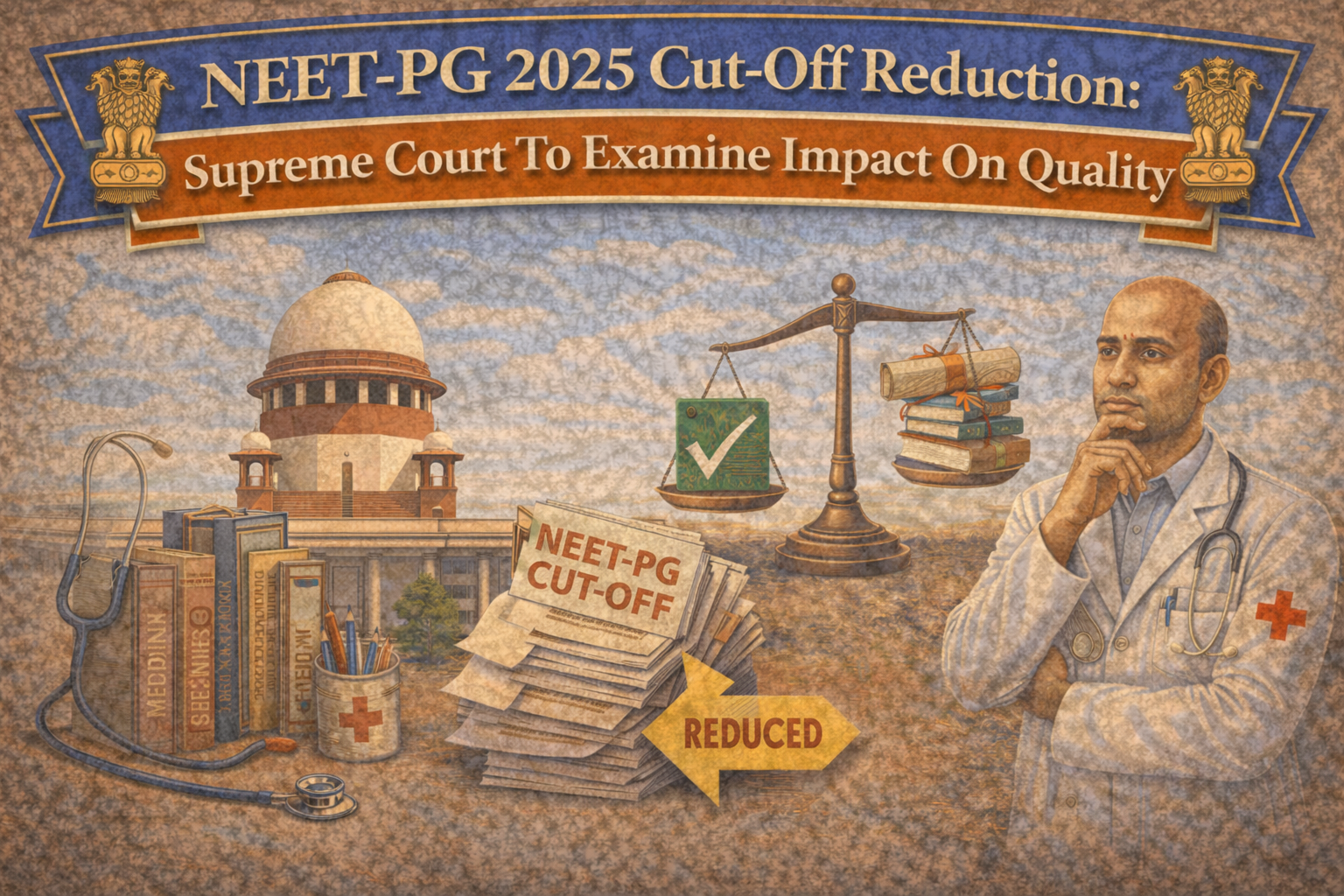
NEET-PG | Supreme Court To Hear On Reconsideration Of NEET-PG 2025 Cut-Off Reduction Amid 'Interest In Price War': Concern That Quality Would Be Adversely Affected
In a major development related to the admission process for postgraduate medical courses, the Supreme Court has decided to hear a case regarding the reduction in NEET-PG 2025 cut-off percentile. The issue has become a nationwide discussion, debated with utmost concern over the declining parameters of medical education and healthcare standards in India.
Policymakers, aspiring and current health care students have taken notice — many of them feeling that if the qualifying percentile were to be lowered it could undermine an admission process that they argue is based in merit and elevate academic standards.
NEET-PG Cut-Off Controversy — A Background
The controversy arose after authorities lowered the NEET-PG 2025 qualifying percentile to ensure that their is no vacant seat in postgraduate medical seats. The move is intended to prevent wastage of seats, but critics contend that such easing may compromise the overall quality of postgraduate medical education.
The petitioners have filed the plea in the Supreme Court apprehending that such cut-off reductions may lead to all future specialists being "inept".
Supreme Court’s Observations
In preliminary hearing, the Supreme Court raised apprehension over what would be the long-term implications of reducing qualifying benchmarks. The bench asked if repeated erosion of percentiles could harm the quality of healthcare services across the country.
The Court has now agreed to consider whether this cut-off reduction is consistent with regulatory standards and public interest.
What are the importance of NMC in Policy framework
The NMC is the apex body that regulates postgraduate medical education in India. Decisions regarding any qualifying percentiles and seat allocation are governed by wider regulatory oversight underpinned by NMC guidelines.
The petition will have to establish whether the decision on the cut-off reduction is in line with standards upheld by the NMC to ensure high academic standards and professional skills.
Global Standards and WHO Perspective
All healthcare education worldwide has competency-based benchmarks to ensure standards and quality. By providing quality-driven medical training, the WHO ensures all healthcare professionals achieve internationally recognised levels of competency.
As per the experts, any relaxation in cut-off scores would have to be careful not to impact the already low standards of healthcare adopted across education institutions guided by WHO.
Academic and Research Community Response
The reactions from medical educators and institutions have been mixed. Others see empty seats as wasted resources and applaud the temporary reprieve. Others warn that used judiciously, with merit thresholds maintained strictly, the schemes were crucial to preserving the credibility of postgraduate qualifications.
As organizations like WDOMS emphasize, postgraduate training should focus on skill acquisition and the ability to demonstrate clinical expertise while allowing specialists to meet international standards.
Impact on Aspirants
The debate has no doubt created confusion for students. Meanwhile, while some candidates embrace the loosening as an opportunity, others fear a more crowded field for future cycles if standards change unpredictably.
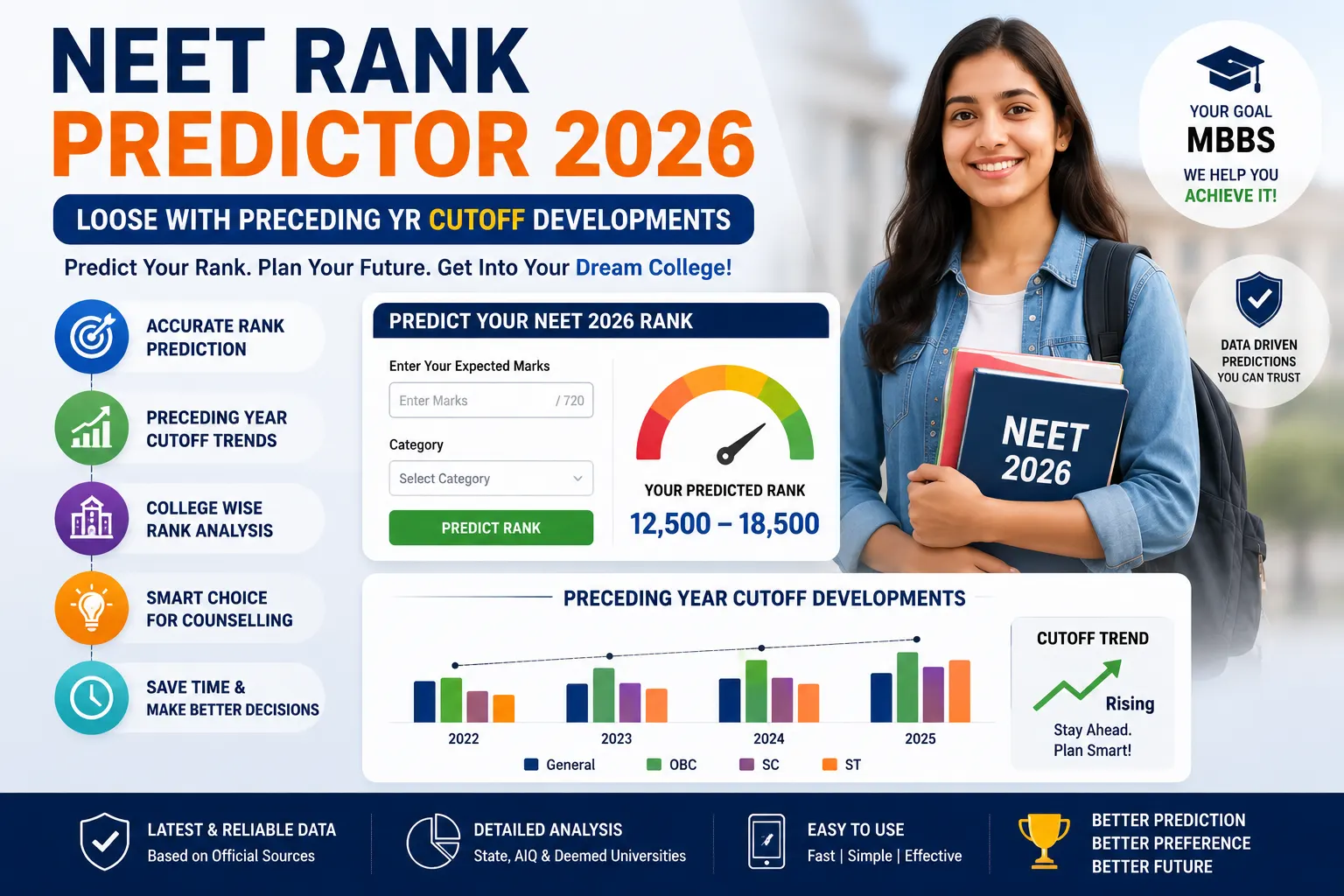
Most of the aspirants depend on analytics tools like the NEET RANK PREDICTOR to analyze trend patterns and learn about the possibilities. Still, abrupt policy shifts cause long-term projection models to be less stable.
Hence, the NEET RANK PREDICTOR is a great strategy tool still but regulatory change has a lot to do with its validity.
Balancing Access and Quality
The linchpin question for the Supreme Court, then, is whether increased access via cut-off reduction is a fair price to pay for (potential) degradation in educational quality.
NMC framework stresses on merit-based admissions and world bodies like WHO favors preserving the high level of competency standard. WDOMS-associated institutions have reaffirmed a commitment of maintaining rigorous postgraduate standards.
The final verdict of the Court may serve as a guideline for future NEET-PG and other national level medical exams.
What Happens Next?
The Supreme Court is likely to await detailed responses from regulatory authorities before passing its judgement. The ruling could affect future percentile decisions and influence post-graduate medical admission policies throughout the country.
However, aspiring doctors must await official notification and should not count on such relaxation in their percentile while preparing.
Conclusion
The Supreme Court’s move to scrutinise the reduction of the NEET-PG 2025 cut-off is a testament to this tension between accessibility and academic quality that never quite seems to go away. So, with the oversight of NMC, global standards driven by WHO, academic repository represented via WDOMS and analytical tools as NEET RANK PREDICTOR, the discussion moves past admissions to future healthcare standards in India.
The judgment could redefine how qualifying benchmarks are determined, ensuring that both opportunity and excellence remain at the heart of India’s medical education system.