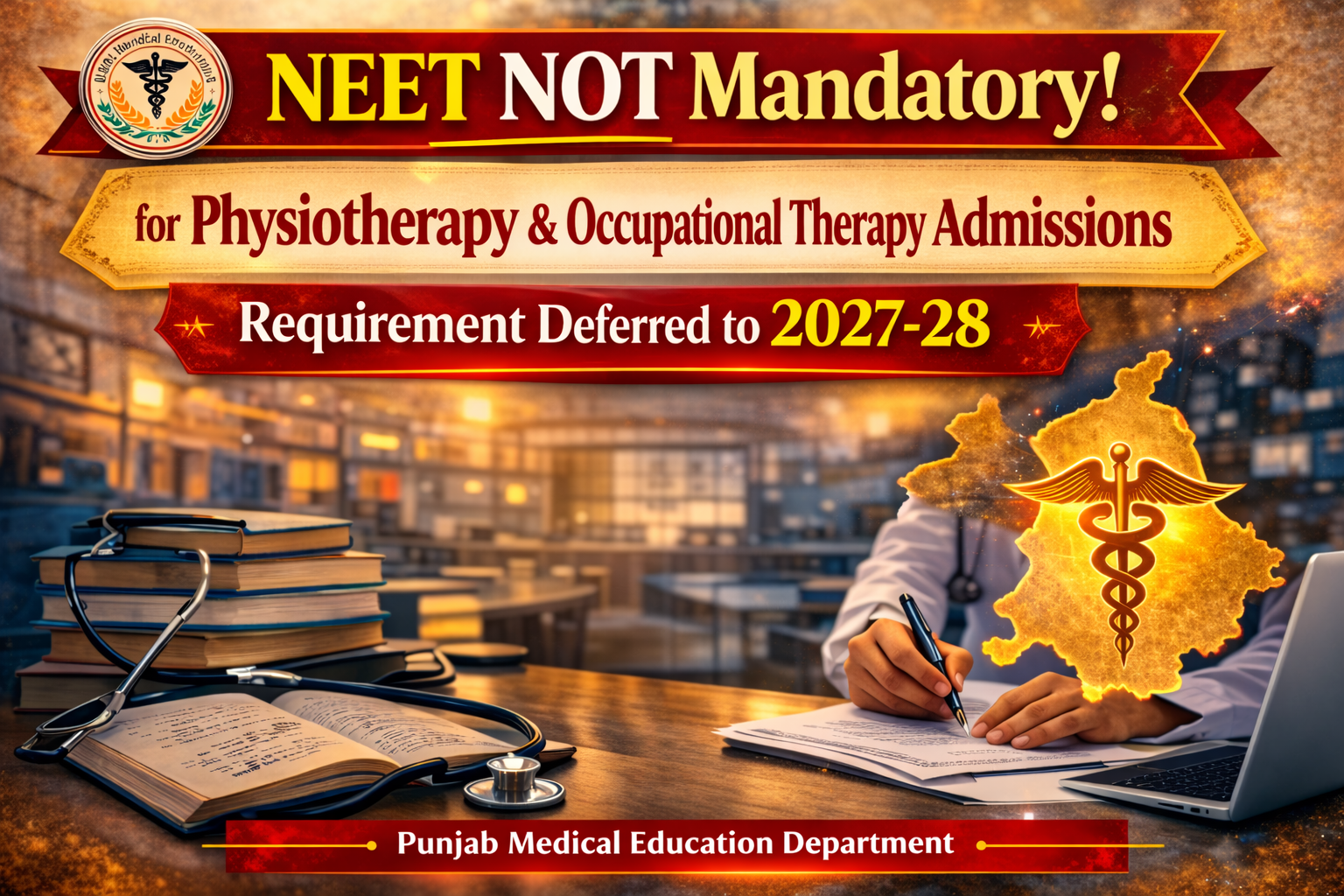
Physiotherapy, Occupational Therapy: NEET Not Mandatory This Year; Determination Deferred Till 2027-28
However, in a major relief for allied healthcare aspirants, the NEET UG exam will not be required for admissions to physiotherapy and occupational therapy courses during the 2026–27 academic session, authorities have now announced. Now, the rule of NEET qualification for these courses has been deferred till the academic year 2027–28.
National Commission for Allied and Healthcare Professions (NCAHP) revealed the news after considering the logistical hurdles in conducting the NEET UG 2026 exam.
The commission had earlier in the day proposed that Bachelor of Physiotherapy (BPT) and Bachelor of Occupational Therapy (BOT) admissions be done through NEET from 2026. The requirement, however, has been deferred for a year following a consultation with the National Testing Agency (NTA) and the Ministry of Health and Family Welfare.
This latest update came as a huge relief for thousands of students, who wanted to take up allied healthcare careers without appearing for NEET this year.
Why NEET Requirement Was Postponed
The official notification said that the decision to postpone requirements for NEET was made in view of the fact that preparations for NEET UG 2026 are already at an advanced stage.
Adding BPT and BOT courses in the exam this year could have the following consequences, authorities warned:
A huge spike in the volume of candidates
Administrative and logistical difficulties during the examination
Hardships in handling exam centers and candidate data
Hence, the mandatory NEET regulation has been postponed for the new session — to make it smoother to implement after the 2027–28 educational session.
What This Means for Admissions for 2026-27
NEET scores are not required for students seeking admission to physiotherapy or occupational therapy programs for the 2026–27 academic session.
Instead, admissions will be based on Class 12 marks in science subjects, more so in:
Physics
Chemistry
Biology
Based on these marks, universities and colleges can prepare merit lists or conduct their independent admission processes.
Eligibility for BPT & BOT Admissions
Eligibility Conditions for BPT or BOT Courses in 2026-27
Academic Qualification
Applicants must have cleared Class 12 (10+2) with Physics, Chemistry and Biology.
Minimum Marks Requirement
General/EWS: Minimum 50% in PCB
SC/ST/OBC/PwBD: Minimum 40% in PCB
Additional Requirement
Class 12 must include English as one of the passed subjects.
This criteria would apply till implementation of NEET requirement in 2027.
When NEET Will Become Mandatory
According to the new policy, NEET qualification will be mandatory for admission to the following from 2027–28 academic session onwards:
Bachelor of Physiotherapy (BPT)
Bachelor of Occupational Therapy (BOT)
The aim is to standardize admissions in allied healthcare courses and bring uniformity in the system with other medical courses like MBBS and BDS.
Importance of Allied Healthcare Courses
Physiotherapy and occupational therapy are two of the fastest-growing healthcare professions.
Physiotherapy
Physiotherapists are trained to use rehabilitation exercises and therapy to help patients recover from injuries, surgeries, and physical disabilities.
Occupational Therapy
Occupational therapists help people regain the capacity to perform daily activities after illness, injury or disability.
As demand for healthcare services surges and populations age, these professions are becoming more vital across the world.
NEET’s Role in Medical Education
At present, NEET UG is the only entrance test for medical courses like:
MBBS
BDS
AYUSH programs
Veterinary sciences
The NMC regulates these courses in India.
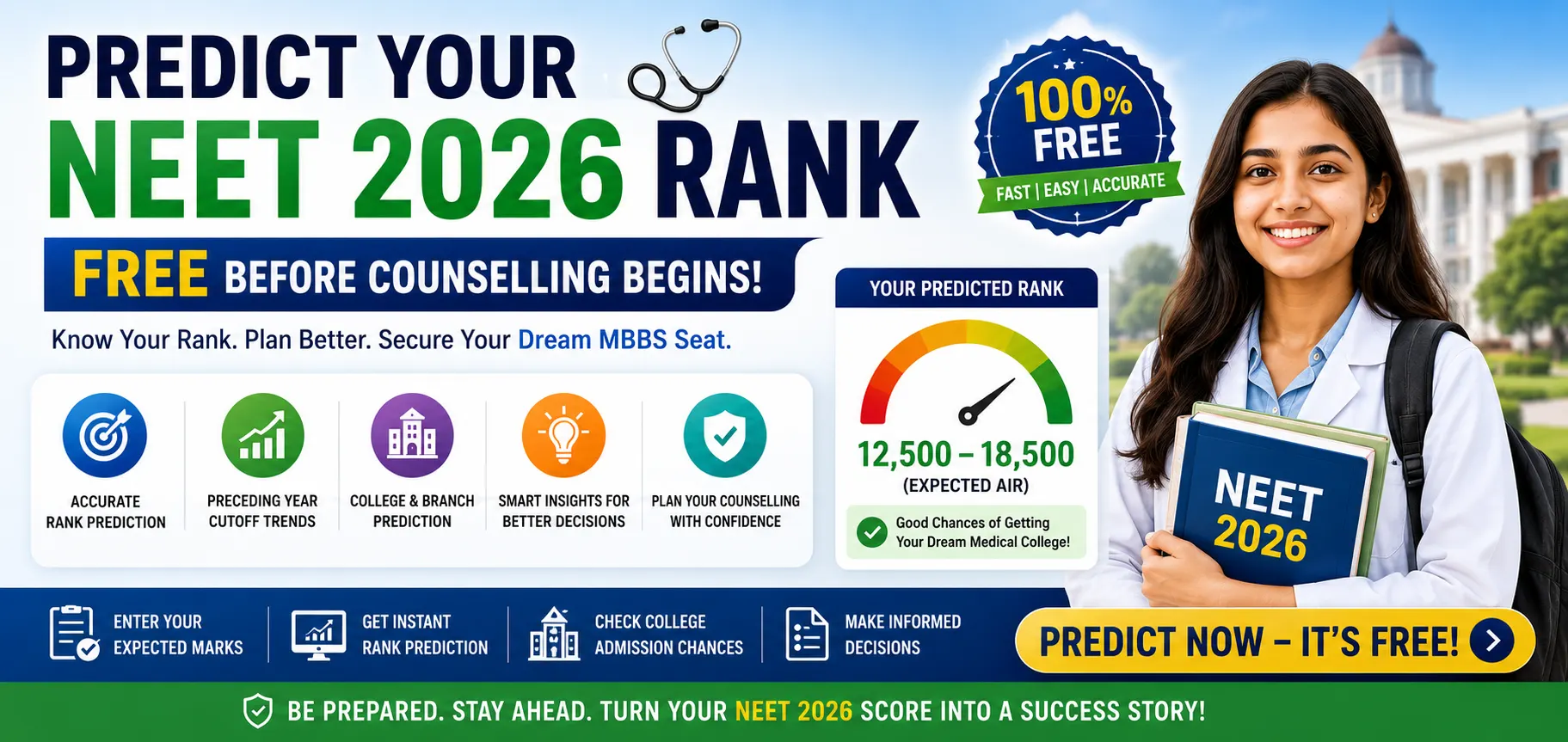
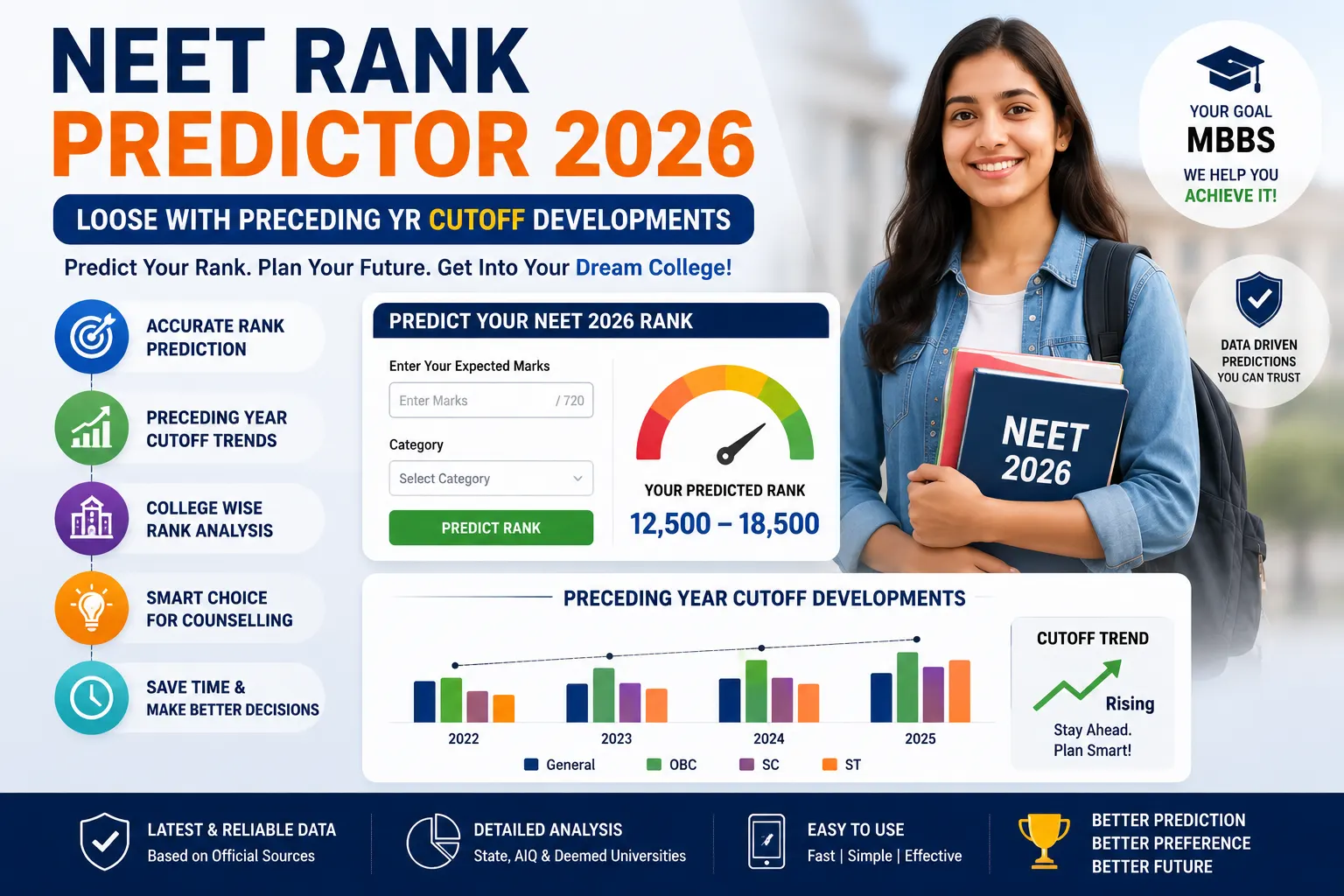
Due to fierce competition for government medical seats, students commonly use tools such as the NEET Rank Predictor to determine their rank and explore potential admission pathways.
Growing Interest in Studying Medicine Abroad
It is still one of the most competitive fields and students studying MBBS from Indian medical colleges get seats through very tough competition. Hence, several candidates choose to pursue medicine from overseas.
One such destination that is slowly gaining popularity among Indian students is MBBS in Georgia.
Some reasons for its growing popularity are:
Cheaper tuition fees compared to private colleges in India
English-medium medical programs
Modern medical infrastructure and hospitals
International exposure and training opportunities
Global Recognition of Medical Universities
It is essential for all students interested in pursuing MBBS in Georgia to check if the university has global recognition.
Important factors include:
WDOMS Listing
The WDOMS is the World Directory of Medical Schools. Universities listed in WDOMS have international recognition.
WHO Recognition
Universities aligned with international standards connected to the WHO add credibility and global acceptance to the medical degree.
NMC Guidelines
Studying at universities that comply with NMC rules is essential for students who want to practice medicine in India after graduation.
How the Decision Benefits Students
The postponement of NEET for physiotherapy and occupational therapy admissions benefits students in several ways:
Students get an additional year to prepare for NEET
Colleges receive time to adjust their admission systems
Admissions remain stable without sudden procedural changes
The one-year delay will allow authorities to implement the system more effectively when introduced from 2027.
Prospects of Allied Healthcare Education in India
Allied healthcare professions are becoming increasingly important as the Indian healthcare system rapidly expands.
Fields such as:
Physiotherapy
Occupational therapy
Medical laboratory technology
Radiology
Rehabilitation sciences
are expected to witness growing demand in the coming years.
From 2027–28, the introduction of NEET for these courses is part of the government’s larger plan to bring standardization and transparency in healthcare education admissions.
Conclusion
Many students interested in allied healthcare careers have welcomed the decision that NEET will not be compulsory for physiotherapy and occupational therapy admissions for the 2026–27 academic year.
Admissions to these programs will continue to be based on Class 12 PCB marks, while NEET eligibility will become mandatory starting from the 2027–28 academic session.
Meanwhile, students preparing for medical careers continue to follow guidelines issued by the NMC and use tools like the NEET Rank Predictor to evaluate their admission chances.
For those exploring international options, programs like MBBS in Georgia offered by universities listed in WDOMS and recognized by global organizations connected with the WHO remain popular pathways for pursuing medical education abroad.