NEET Aspirant Death In Kota: Body Of Missing NEET Aspirant Found In Canal
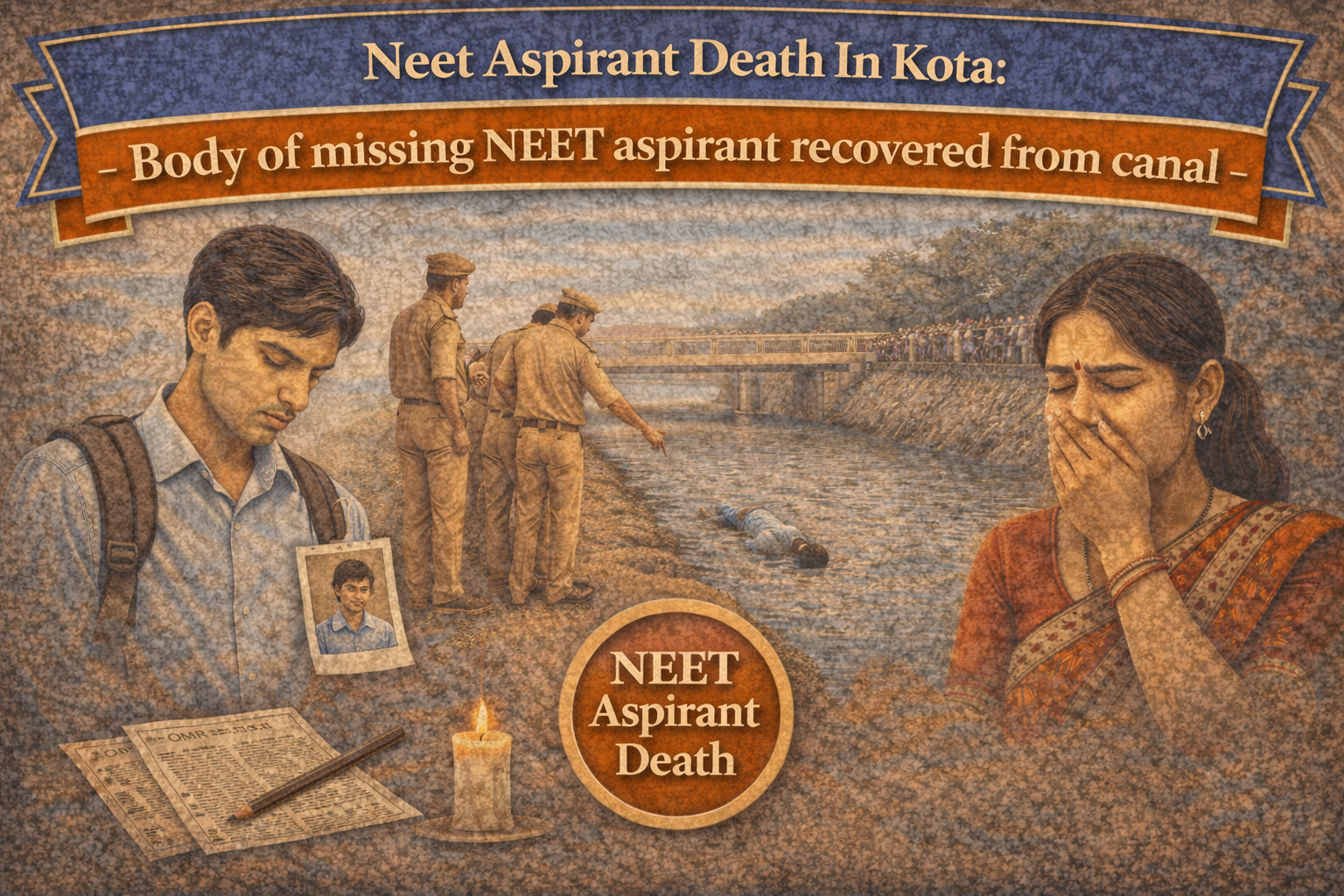
NEW DELHI: In a sad news coming from Kota in Rajasthan, the body of an NEET aspirant who went missing has been found in a canal, causing ripples throughout the student community. Kota, India's known center for coaching for medical or engineering entrance tests, once again hit the headlines after the heart-rending incident.
Local officials said the student had been reported missing earlier this week. Authorities retrieved the body from a nearby canal after an extensive search operation. The incident has also brought forth renewed serious concerns on issues around mental health faced by aspirants preparing for competitive exams.
Incident Details and Police Investigation
The student had been staying at a coaching hostel to prepare for the NEET examination, according to police sources. Before a missing complaint was filed, family members had lost contact with the man, according to reports. Those personal items were later found near the canal area, resulting in the search operation.
Authorities launched a comprehensive investigation to ascertain the precise conditions of the death. Although preliminary findings show no immediate signs of foul play, the investigation is ongoing.
Rising Pressure Among NEET Aspirants
Kota has been a hub for rigorous coaching, attracting thousands of students each year with dreams to clear NEET. However, students’ mental well-being is often affected by academic pressure and expectations from their families or competitive environments.
The battle for medical seat has become increasingly fierce, experts say. As there are very few government seats and lakhs of aspirants, the psychological burden can be too much for some students.
Regulatory Concerns and NMC Oversight
The unfortunate incident has reignited discussion on student well-being in the medical admissions ecosystem. Though the NMC passes regulations on medical education standards, and admissions, stakeholders suggest that aspirants should also be made aware of such institutional mechanisms.
NMC frameworks consistently inform policy discussions that focus on academic integrity and the need for enhanced levels of student support.
WHO and WDOMS Global Perspective on Student Mental Health
Organizations such as the WHO have stressed the importance of mental health awareness in schools for students under academic pressure. According to WHO guidelines, institutions are encouraged to include counselling and psychological support as part of the educational systems.
Likewise WDOMS has emphasized the importance of a holistic dental and medical training environment that focuses on well-being as much as it does about academic success. Standardising Indian coaching and academic systems with recommendations by the WHO, as well as the WDOMS mandate like limited periodisation training could reduce stress-related incidents.
Importance of Competitor tools such as NEET RANK PREDICTOR
In the contemporary preparation ecosystem, aspirants use a plethora of digital tools like NEET RANK PREDICTOR to analyze performance outcomes. Though a NEET RANK PREDICTOR may help students maintain some clarity regarding the potential of different spaces, experts believe that relying constantly on predictive models can cause additional stress to students in the competitive atmosphere.
NEET RANK PREDICTOR should only serve as a planning tool and not for self worth: Educational Counsellors Not just balanced preparation strategies but emotional resilience also.
The fabric of Kota, Rajasthan is rich with culture and dreams; however, on the verge of becoming a student success city, it has recently attracted negative media coverage for increased child fatalities.
This incident is part of the series of events raising concern over student safety, mental and emotional well-being in Kota’s coaching ecosystem. To curb stress-related cases, authorities have in the past introduced measures like counseling helplines, regular mentoring sessions and even hostel-monitoring systems.
But education activists say the need for stronger systemic reforms is urgent. Reducing unhealthy academic pressure and fostering healthier learning environments, they say, has to be a priority.
The Community Response and Calls for Reform
Parents, educators and policy makers have mourned and called for sweeping changes. As there is an increasing demand for compulsory psychological counseling sessions in coaching institutions and also a tight check on the wellbeing of pupils.
This view is bolstered by regulatory conversations around NMC standards in addition to global perspectives provided by WHO & academic viewpoints while pointing towards the need for a balance, thus advocating shifting the focus to an educational model that gives equal weightage to merit as well as mental health.
Conclusion
The retrieval of the body of a missing NEET aspirant from a canal in Kota is a tragic reminder of the tremendous pressure students winging their way through competitive exams go through. As the investigation proceeds, the incident has also reopened a debate on mental health support mechanisms in India’s entrance examination ecosystem.
Let this ambition to excel in the medical field not come at the expense of mental peace! With NMC's regulatory oversight, WHO's global mental health guidance and academic-supported insights from WDOMS along with tools like NEET RANK PREDICTOR widely available, it is imperative that we foster an environment where dreams do not take a toll on health.
The tragedy serves as a stark reminder of the need for systemic changes that put students’ safety, emotional well-being, and appropriate academic expectations first.