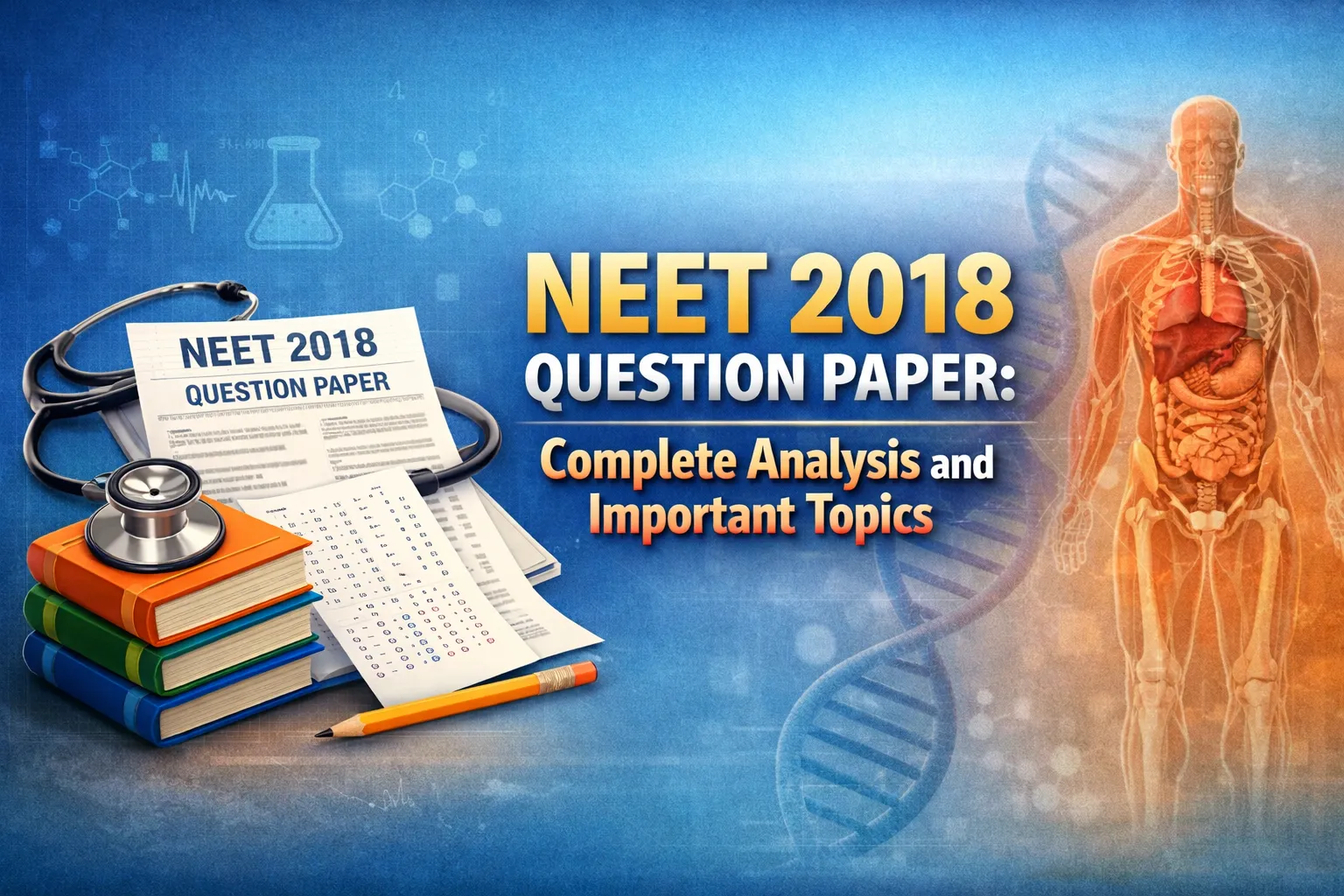
NEET Question Paper 2018: Detailed Analysis & Top Weightage Topics
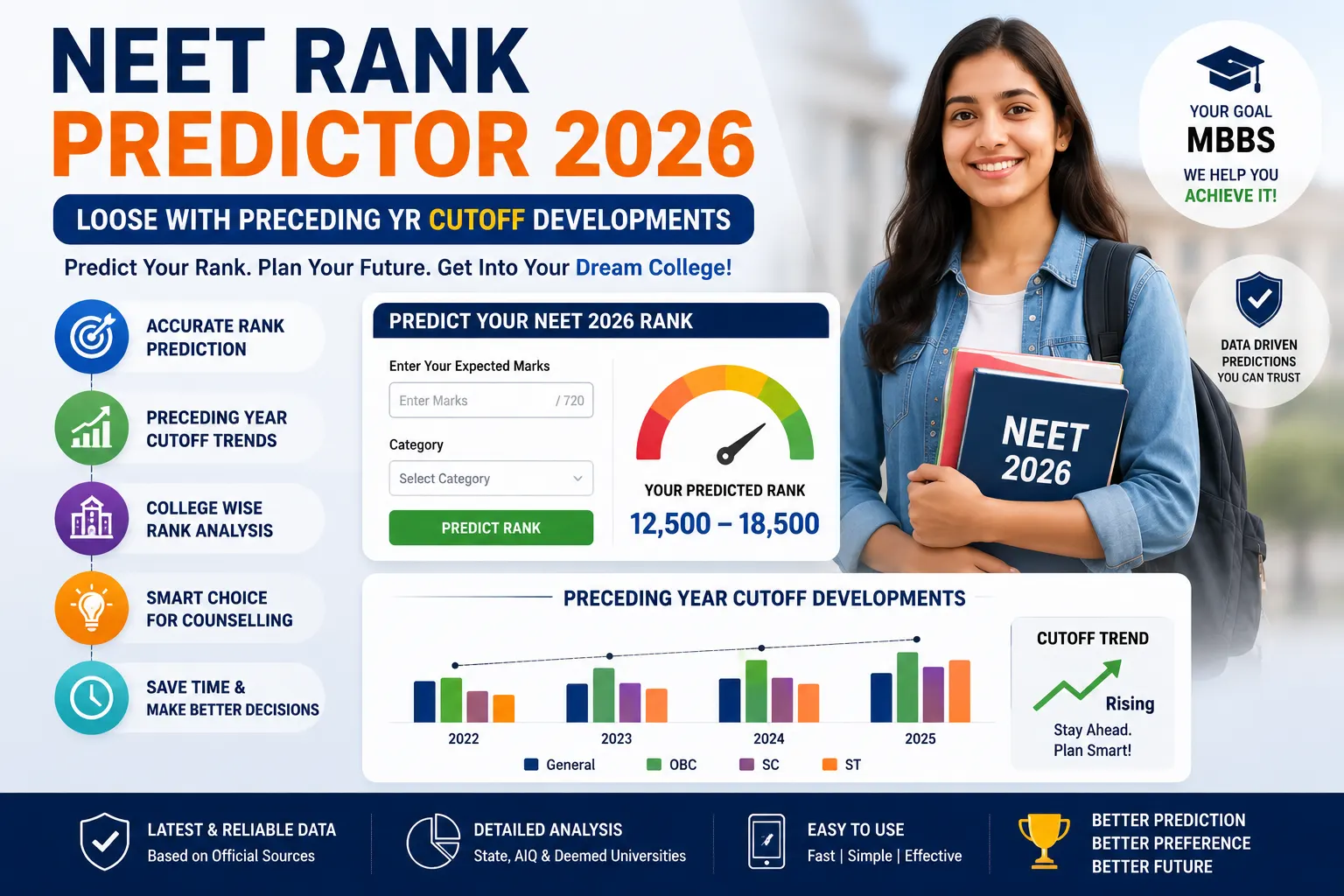
The NEET 2018 examination was a pivotal stepping stone for aspiring medical students in India. With lakhs of candidates competing, analyzing the question paper provides a huge advantage for future NEET aspirants preparing for NEET 2026. Insights from frequent topics, question trends, and difficulty levels help in focused preparation. Additionally, using a NEET Rank Predictor allows students to estimate their rank based on mock tests or predicted scores, aiding in admission planning for state or national quota seats.
Overview of NEET 2018
Total Candidates Appeared: Approx. 13.26 lakh
Disciplines: Physics (45), Chemistry (45), Biology (90)
Maximum Marks: 720
Mode: Pen & Paper (Offline)
The NEET 2018 pattern focused on conceptual understanding and application of knowledge from NCERT textbooks. High-scoring candidates emphasized regular practice, revision, and analysis of previous year papers.
NEET 2018 Question Paper Structure
| Subject | Number of Questions | Maximum Marks |
|---|---|---|
| Physics | 45 | 180 |
| Chemistry | 45 | 180 |
| Biology | 90 | 360 |
Difficulty Level Analysis
Physics: Moderate to difficult; more numerical & conceptual questions
Chemistry: Moderate; dominated by NCERT-based questions
Biology: Easy to moderate; primarily NCERT-based, highest weightage (50% of total marks)
Step-by-Step NEET 2018 Analysis
Physics Section
Key topics:
Mechanics: Motion, Work, Energy & Power
Electrostatics & Current Electricity
Magnetic Effects of Current & Magnetism
Modern Physics: Photoelectric Effect, Dual Nature of Matter
Oscillations & Waves
Strategy:
Practice numerical problems rigorously
Revise formulas frequently
Solve previous year questions for time management
Chemistry Section
Important topics:
Physical Chemistry: Thermodynamics, Chemical Kinetics, Solutions
Organic Chemistry: Hydrocarbons, Haloalkanes, Alcohols, Aldehydes & Ketones
Inorganic Chemistry: Periodic Table, Chemical Bonding, Coordination Compounds
Advice: Concentrate on NCERT Chemistry as most questions were sourced directly.
Biology Section
Key topics:
Human Physiology: Digestive, Circulatory, Excretory Systems
Genetics & Evolution
Ecology & Environment
Biotechnology & Applications
Plant Physiology
Observation: Biology carried 360 marks, making it crucial for scoring high. Memorizing NCERT lines and diagrams is key.
NEET 2018 – Frequently Asked Topics
Genetics & Molecular Biology
Human Physiology diagrams and functions
Physics laws: Thermodynamics & Motion
Chemical Bonding & Coordination Chemistry
Aspirants can use this to prepare short notes, flashcards, and focus areas for NEET 2026.
State-Wise and Category-Wise Trends
Best Performing States
Category-Wise AIR Trends
General category toppers: 680+ marks
OBC, SC, ST category toppers: 620–650 marks
Using a NEET Rank Predictor helps students plan All India and state quota seats efficiently.
Role of Regulatory and Recognizing Agencies
National Medical Commission (NMC): Governs medical education in India and standardizes NEET admissions
World Health Organization (WHO): Validates medical programs internationally
World Directory of Medical Schools (WDOMS): Lists recognized medical schools worldwide
Recognition ensures the degree is valid for international practice and licensing exams.
How NEET 2018 Analysis Helps NEET 2026 Preparation
Focus on Important Topics: High-weightage chapters in Biology, Physics, Chemistry
Practice Previous Year Papers: Boost speed and accuracy
Mock Tests & Score Analysis: Use NEET Rank Predictor for performance insights
Category & State Insights: Analyze previous trends for realistic expectations
Regular Revision: Formulas, diagrams, and NCERT lines
Key Takeaways
NEET 2018 was heavily NCERT-based, especially in Biology and Chemistry
Physics requires strong conceptual clarity and numerical practice
Past trends aid in strategizing preparation for NEET 2026
Using NEET Rank Predictor helps estimate AIR and plan counseling
Awareness of NMC, WHO, and WDOMS ensures informed decisions for studying abroad
Conclusion
Analyzing NEET 2018 equips aspirants with insights on question trends, difficulty, and high-weightage topics. Combining previous year analysis with NEET Rank Predictor enables aspirants to set realistic targets, refine strategies, and approach NEET 2026 confidently. Consistent practice, strategic revision, and informed planning pave the way to top ranks.