NEET 2017 Topper Death Rumour: What Happened & Key Lessons for Students
Preparing for the National Eligibility cum Entrance Test (NEET) is one of the most challenging academic journeys for medical aspirants in India. Every year, millions of students appear for this highly competitive examination with the dream of securing admission to MBBS and BDS programs.
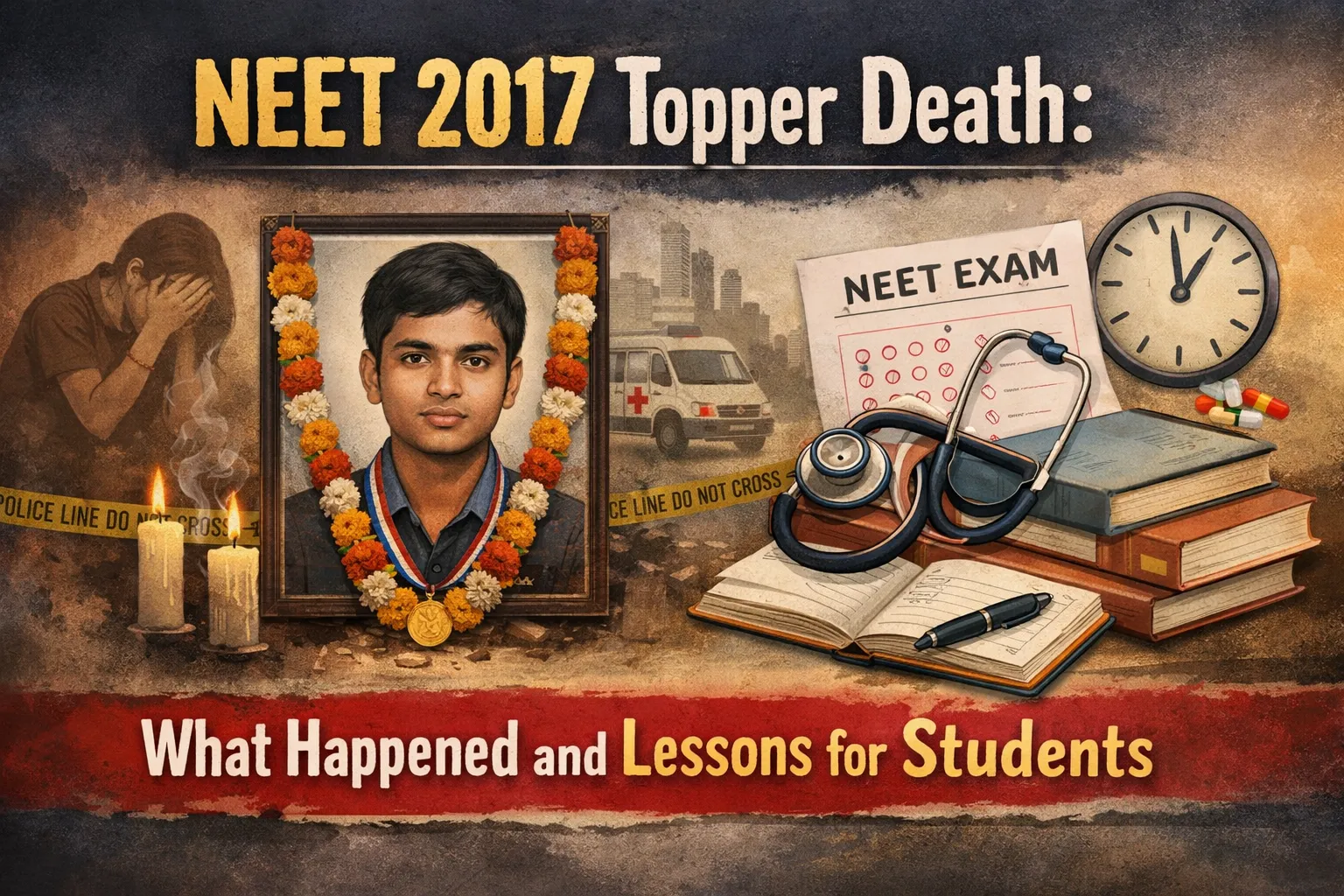
Over the years, discussions around student stress and mental health during NEET preparation have increased significantly. After the NEET 2017 examination, various social media reports circulated regarding a “NEET topper death,” which sparked widespread debate about the mental pressure faced by students preparing for competitive exams.
While many such claims remain unverified, the incident highlighted an important issue — the growing mental stress among students preparing for high-stakes examinations.
Today, students often analyze their expected performance using tools like a NEET Rank Predictor, but experts emphasize that academic results should never come at the cost of mental well-being.
The Pressure of NEET Preparation
NEET is considered one of the most competitive entrance examinations in India.
Every year:
Over 15–20 lakh students appear for the exam
Only a limited number of government MBBS seats are available
Students prepare for months or even years
Major Reasons Behind NEET Stress
Several factors contribute to the pressure experienced by NEET aspirants:
1. High Competition
With millions of candidates competing for limited seats, students often feel intense academic pressure.
2. Long Study Hours
NEET preparation requires strong command over Physics, Chemistry, and Biology, often involving long study sessions and continuous revision.
3. Fear of Failure
Many students believe that their future depends entirely on one exam, which can create anxiety and self-doubt.
4. Social Expectations
Parents, relatives, and society sometimes place unrealistic expectations on students.
After the exam, many students also try to estimate their score using answer keys and tools like a NEET Rank Predictor, which can sometimes increase anxiety if used excessively.
Mental Health Challenges Faced by Aspirants
Competitive exams can create several psychological challenges for students.
Academic Burnout
Studying continuously without proper breaks may lead to exhaustion and reduced motivation.
Isolation
Many aspirants limit social interactions during preparation, which may result in loneliness.
Anxiety and Self-Doubt
Students often compare their performance with peers, leading to unnecessary stress.
Perfectionism
High-achieving students sometimes feel pressure to maintain perfect scores, which can negatively affect mental health.
Important Lessons for NEET Aspirants
The discussions surrounding student stress during **NEET 2017 preparation highlight several lessons for future aspirants.
1. Prioritize Learning Over Ranking
Students should focus on understanding concepts rather than obsessing over ranks.
Tools like rank predictors should be used only as guidance.
2. Maintain a Balanced Routine
A healthy study routine should include:
Regular study sessions
Short breaks
Physical activity
Adequate sleep
A balanced routine improves both productivity and mental well-being.
3. Seek Support When Needed
Students should never hesitate to talk to:
Teachers
Parents
Friends
Counselors
Discussing stress can significantly reduce emotional pressure.
4. Avoid Constant Comparison
Every student learns at a different pace. Constant comparison with others can lead to unnecessary anxiety.
Role of Parents and Teachers
Parents and teachers play a crucial role in supporting students preparing for competitive exams.
Encourage Realistic Expectations
Instead of focusing only on ranks, parents should appreciate effort and improvement.
Provide Emotional Support
Encouraging words and understanding can boost a student’s confidence during preparation.
Identify Stress Signals
Signs such as withdrawal, loss of interest, or extreme anxiety should be addressed immediately.
Choosing the Right Medical College After NEET
After clearing NEET, selecting the right medical college is equally important.
Students must ensure that the institution is recognized by the appropriate regulatory bodies.
National Medical Commission (NMC)
The NMC regulates medical education standards in India. Graduates from NMC-recognized colleges are eligible to practice medicine in India.
World Health Organization (WHO)
The WHO maintains global health standards and collaborates with recognized medical institutions worldwide.
World Directory of Medical Schools (WDOMS)
The WDOMS lists recognized medical universities globally. Students planning to study abroad should ensure their university appears in this directory.
Smart Preparation Tips for NEET Aspirants
To reduce stress and improve performance, students can follow these strategies:
Study according to the NCERT syllabus
Solve previous years’ NEET question papers
Take regular mock tests
Analyze mistakes and improve weak areas
Maintain a healthy lifestyle
Consistent preparation and positive mindset can significantly increase the chances of success.
Conclusion
Discussions surrounding the alleged NEET 2017 topper death brought attention to an important issue — student mental health during competitive exam preparation.
NEET preparation should focus not only on academic performance but also on emotional well-being. Students must remember that exams are only one step in their career journey.
With balanced preparation, strong support systems, and a healthy mindset, aspirants can achieve their medical career goals without compromising their mental health. 🚀