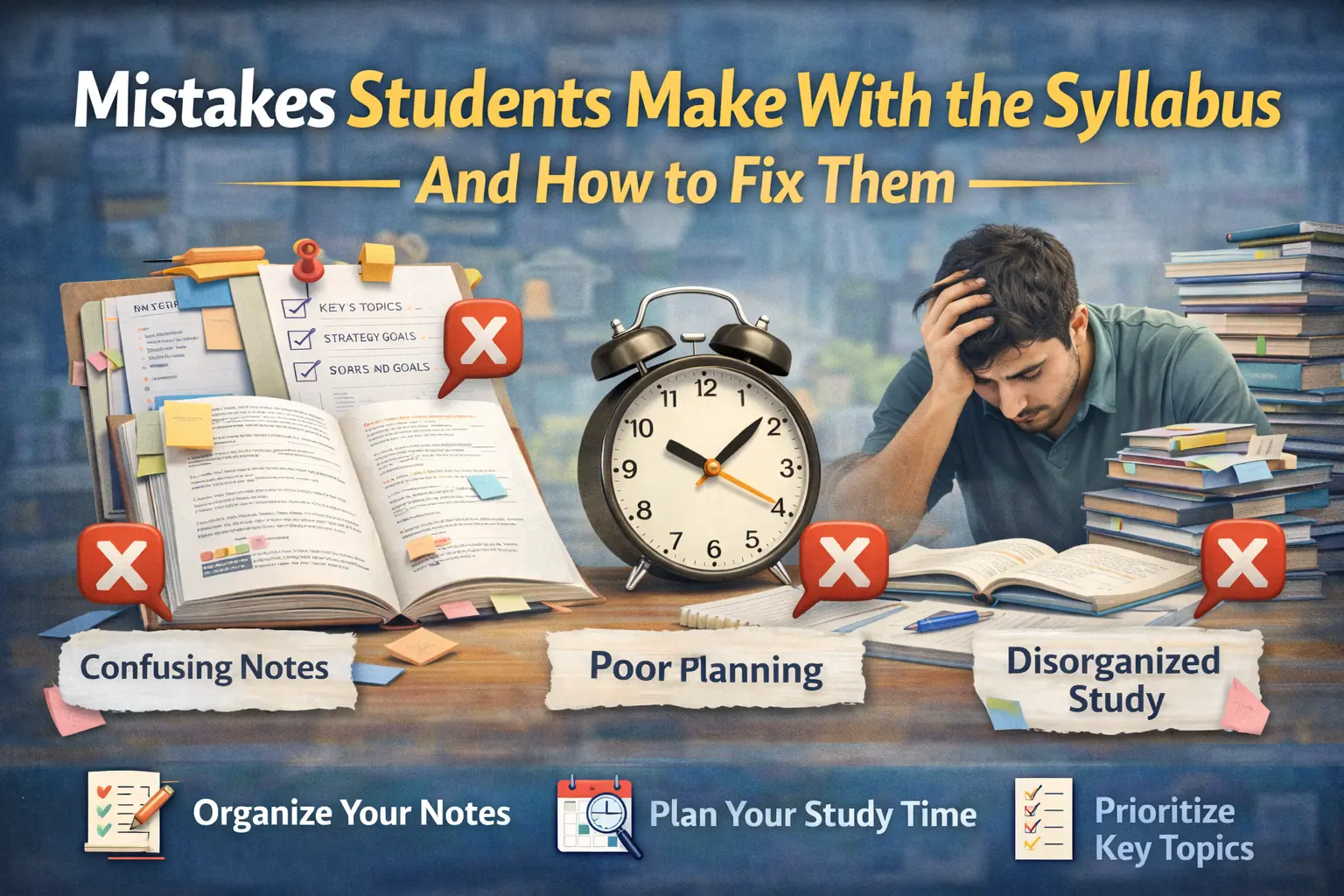
Mistakes Students Make With the Syllabus — And How to Fix Them
Preparing for the NEET exam is a challenging journey for thousands of medical aspirants in India. Every year, lakhs of students appear for the exam hoping to secure a seat in a prestigious medical college recognized by bodies such as the NMC, WDOMS, and WHO. However, one of the biggest reasons many students fail to achieve their desired rank is not a lack of hard work but mistakes made while understanding and following the syllabus.
The NEET syllabus is vast and covers multiple topics from Physics, Chemistry, and Biology. Without proper planning and strategy, students often end up wasting time on irrelevant topics or ignoring important chapters. Tools like a NEET Rank Predictor can help students estimate their performance, but success ultimately depends on how well they prepare according to the syllabus.
In this article, we will discuss the most common mistakes students make with the NEET syllabus and practical ways to fix them, so you can prepare smarter and increase your chances of getting into a medical college recognized by the NMC, listed in WDOMS, and acknowledged by the WHO.
Understanding the Importance of the NEET Syllabus
Before discussing the mistakes, it is important to understand why the syllabus is so crucial. The NEET syllabus acts as the foundation of your preparation. It defines exactly what topics you need to study and what areas are likely to appear in the exam.
The syllabus is primarily based on the NCERT curriculum for Classes 11 and 12. Many top-ranking students follow the syllabus strictly and avoid unnecessary materials.
When students ignore the syllabus or misunderstand it, their preparation becomes scattered. Even if they study for long hours, their efforts may not produce the desired results. That is why analyzing your performance with tools such as a NEET Rank Predictor and aligning your preparation with the official syllabus is essential.
Medical colleges that accept NEET scores are regulated by the NMC, and many of them are globally recognized by organizations like WDOMS and WHO. Therefore, preparing properly according to the syllabus can open doors to both Indian and international medical opportunities.
Mistake 1: Not Reading the Official Syllabus Carefully
One of the most common mistakes students make is not reading the official syllabus carefully. Many students rely on coaching materials or guesswork instead of checking the official NEET syllabus themselves.
This can lead to two major problems:
Studying topics that are not included in the exam.
Ignoring important topics that frequently appear in the paper.
How to Fix It
Start by downloading the official syllabus and analyzing it chapter by chapter. Create a checklist for Physics, Chemistry, and Biology topics.
This approach helps you:
Track your preparation progress
Focus on relevant topics
Avoid wasting time on unnecessary chapters
Once you complete mock tests, you can also use a NEET Rank Predictor to understand how your preparation aligns with expected ranks.
Mistake 2: Ignoring NCERT Textbooks
Another major mistake students make is relying too heavily on reference books while ignoring NCERT textbooks.
Many toppers emphasize that a large portion of NEET questions, especially in Biology and Chemistry, come directly from NCERT concepts.
Ignoring NCERT can result in missing fundamental concepts that frequently appear in the exam.
How to Fix It
Follow the NCERT-first strategy:
Read NCERT thoroughly
Highlight key points and diagrams
Solve NCERT-based questions
Use reference books only for advanced practice
When you take mock tests and analyze your score with a NEET Rank Predictor, you will often notice that strong NCERT knowledge significantly improves your performance.
This preparation method also ensures that you build the conceptual foundation required to study in medical institutions recognized by the NMC, WDOMS, and WHO.
Mistake 3: Not Prioritizing High-Weightage Chapters
Every year, some chapters contribute more questions in the NEET exam than others. Many students make the mistake of spending equal time on all chapters without considering their weightage.
For example, in Biology, chapters such as Genetics, Human Physiology, and Ecology often carry significant marks.
How to Fix It
Analyze previous years’ question papers and identify high-weightage chapters.
Create a preparation strategy like this:
High-weightage chapters: Maximum focus
Medium-weightage chapters: Moderate practice
Low-weightage chapters: Basic understanding
Using this method can significantly improve your score and predicted rank when checked through a NEET Rank Predictor.
Mistake 4: Not Revising the Syllabus Regularly
Another common mistake is studying topics once and then moving on without proper revision.
The NEET syllabus is vast, and without regular revision, students tend to forget important formulas, diagrams, and concepts.
How to Fix It
Follow the 3-step revision strategy:
Weekly revision of recently studied topics
Monthly revision of completed chapters
Full syllabus revision before mock tests
Consistent revision helps reinforce concepts and improves accuracy during the exam.
When your accuracy improves, your predicted rank also improves when evaluated through a NEET Rank Predictor.
Mistake 5: Avoiding Mock Tests Based on the Syllabus
Some students delay taking mock tests until the final months of preparation. This is a major mistake because mock tests are essential for understanding how well you have covered the syllabus.
Without mock tests, students cannot identify their weak areas.
How to Fix It
Start taking mock tests early in your preparation.
Follow this strategy:
Topic-wise tests after completing each chapter
Sectional tests after finishing a subject
Full-length tests once the syllabus is completed
After each test, analyze your score and check your estimated rank using a NEET Rank Predictor.
This helps you understand how close you are to securing a seat in a medical college recognized by the NMC, listed in WDOMS, and acknowledged by the WHO.
Mistake 6: Poor Time Management While Covering the Syllabus
Many students spend too much time on one subject while neglecting others.
For example, some aspirants focus heavily on Biology because it carries more marks, but they underestimate Physics, which can drastically affect their overall score.
How to Fix It
Create a balanced study schedule.
A good daily plan could look like this:
Biology – 3 hours
Chemistry – 2 hours
Physics – 2 hours
Revision and practice – 1 hour
Balanced preparation ensures consistent performance across all subjects, which ultimately improves your score and predicted rank through a NEET Rank Predictor.
Mistake 7: Not Tracking Progress
Another common mistake is preparing without tracking progress. Students often study for months without knowing whether they are improving.
How to Fix It
Track your preparation using these methods:
Maintain a study journal
Record mock test scores
Analyze weak chapters
Monitor rank predictions using a NEET Rank Predictor
This approach keeps your preparation organized and helps you stay motivated.
Mistake 8: Ignoring the Exam Pattern
Some students prepare according to the syllabus but ignore the exam pattern. This can lead to poor performance despite good knowledge.
The NEET exam tests not only conceptual understanding but also speed and accuracy.
How to Fix It
Practice solving questions within the exam time limit.
Focus on:
Speed improvement
Accuracy
Question selection strategy
Regular practice will make you comfortable with the exam format and improve your results when evaluated through a NEET Rank Predictor.
Why Understanding the Syllabus Matters for Medical Career Goals
Properly following the NEET syllabus is the first step toward achieving your dream of becoming a doctor.
Many students aim to study in institutions recognized by the NMC and listed in international directories like WDOMS. Such recognition ensures that the medical degree is globally accepted.
Organizations like the WHO also recognize many medical institutions worldwide, which opens opportunities for international medical practice.
By avoiding common syllabus-related mistakes and preparing strategically, students can significantly increase their chances of securing admission to these prestigious institutions.
Conclusion
The NEET syllabus is not just a list of topics—it is a roadmap for your entire preparation journey. Many students fail to achieve their desired results because they misunderstand the syllabus or make avoidable mistakes during their preparation.
Some of the most common mistakes include ignoring the official syllabus, neglecting NCERT textbooks, failing to prioritize high-weightage chapters, avoiding mock tests, and poor time management.
The good news is that these mistakes can be easily corrected with proper planning and discipline. By following a structured study strategy, revising regularly, and analyzing your performance through tools like a NEET Rank Predictor, you can improve your preparation and boost your chances of success.
Remember, your ultimate goal is not just to pass the exam but to secure admission in a reputable medical college recognized by the NMC, listed in WDOMS, and acknowledged by the WHO.
If you stay consistent, focused, and disciplined with the syllabus, achieving your dream of becoming a doctor will be much closer than you think. 🚀