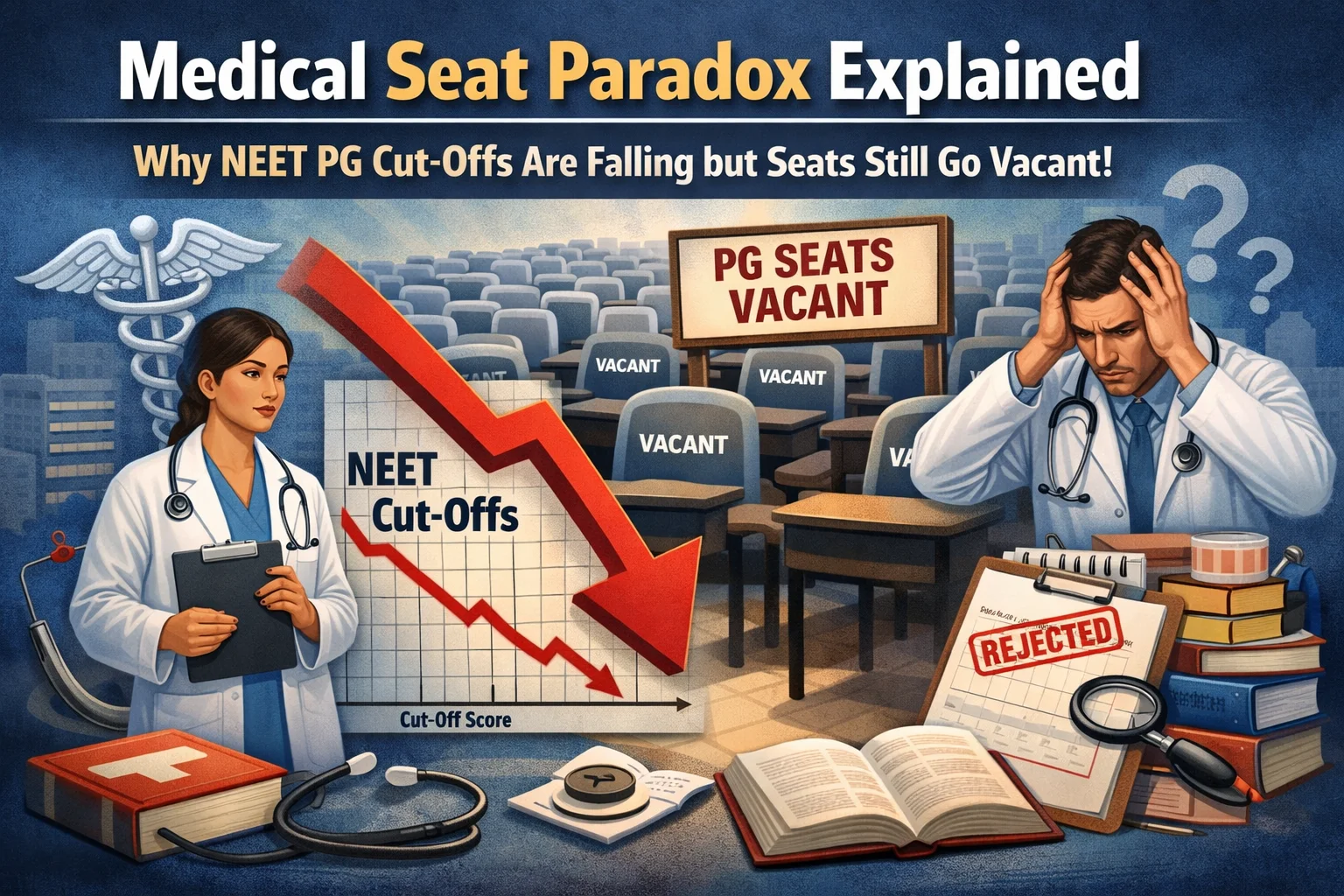
Indian Medical aspirants have observed a dicey saga of Postgraduate medical admissions over the last few years. NEET PG cut-offs are falling every year, but still thousands of MD/MS seats go vacant after counselling rounds. This paradox, known as the Medical Seat Paradox, is symptomatic of broader systemic issues in India’s medical education system.Demand for postgraduate medical seats is highly non-uniform, and there is a big gap between the supply of PGMs and demand, which has led to a tremendous waste of precious medical resources, even with easier eligibility criteria.
Exploring NEET PG and Falling Cut-Offs requirements
All India NEET PG Exam is the only entrance exam through which candidates get admission in MD/MS/PG Diploma courses. It is regulated by laws formulated by the National Medical Commission (NMC).
So, a declining cut-off essentially signifies that people with lesser test scores are being allowed to appear in counselling. This happens due to:
On the rise in the number of seats
Variations in exam difficulty
Policy-based cut-off relaxation for seat-wastage prevention
But mere qualification does not ensure that you take a seat, raising the paradox.
Why Are Seats Still Available Despite Lower Cut-Offs
1. Unequal Demand Across Specialities
The top choices are highly rewarding clinical branches: Radiology, DermaOrtho or maybe just plain sidem(medicine. On the other hand, pre- and para-clinics ( which are difficult to place in PG terms) will largely be neglected.
Passing NEET PG, many candidates would rather burn another year than opt for these branches. Configuration/Pacific Press/LightRocket via Getty Images. Even after clearing NEET PG, a lot of candidates queue up to reject taking these branches.
2. Location and College Preference
Preferring metro cities and well-established government colleges over a somewhat unknown college in the back of the beyond leads to seat surrender. Even though these colleges are entirely NMC recognised, they are in the under-preference list.It is this geographic imbalance which contributes most to empty seats.
3. Counselling Structure Challenges
Very little flexibility is provided in the centralised counselling procedure. Candidates fear accepting a seat early will close off better chances down the road for them. So they pass up available seats, particularly in the early rounds.The system also makes it possible for seats to remain unfilled long into rounds later in the process.
4. Regulatory and Policy Factors
The National Medical Commission also has a critical role in prospectively controlling postgraduate medical education. Suddenly, new educational requirements, building standards or departmental status will leave an institution with empty seats.Also, the reservation policy can create institute-category imbalances in the availability of seats if a suitable number of candidates are not available to be allocated the seat.
5. Incongruity in aspirations and health needs
Specialists are needed in India across all medical categories — public health, diagnostics and the basic sciences. One piece of evidence is that the World Health Organisation (WHO) notes that a balanced healthcare workforce is essential for good health systems.But many applicants’ number one concern is money and going into private practice, ignoring specialities that allow for a steady career in academics, research or public health. It also exacerbates the gap between seat vacancies and the number of eligible applicants.
6. Financial Constraints and Service Bonds
Heavy fees in private medical colleges scare candidates from taking admissions even if they qualify. Also such states which have a system of mandatory service bond, a large number of students are reluctant to decide before getting career clarity.
Importance of Smart Counselling Decisions
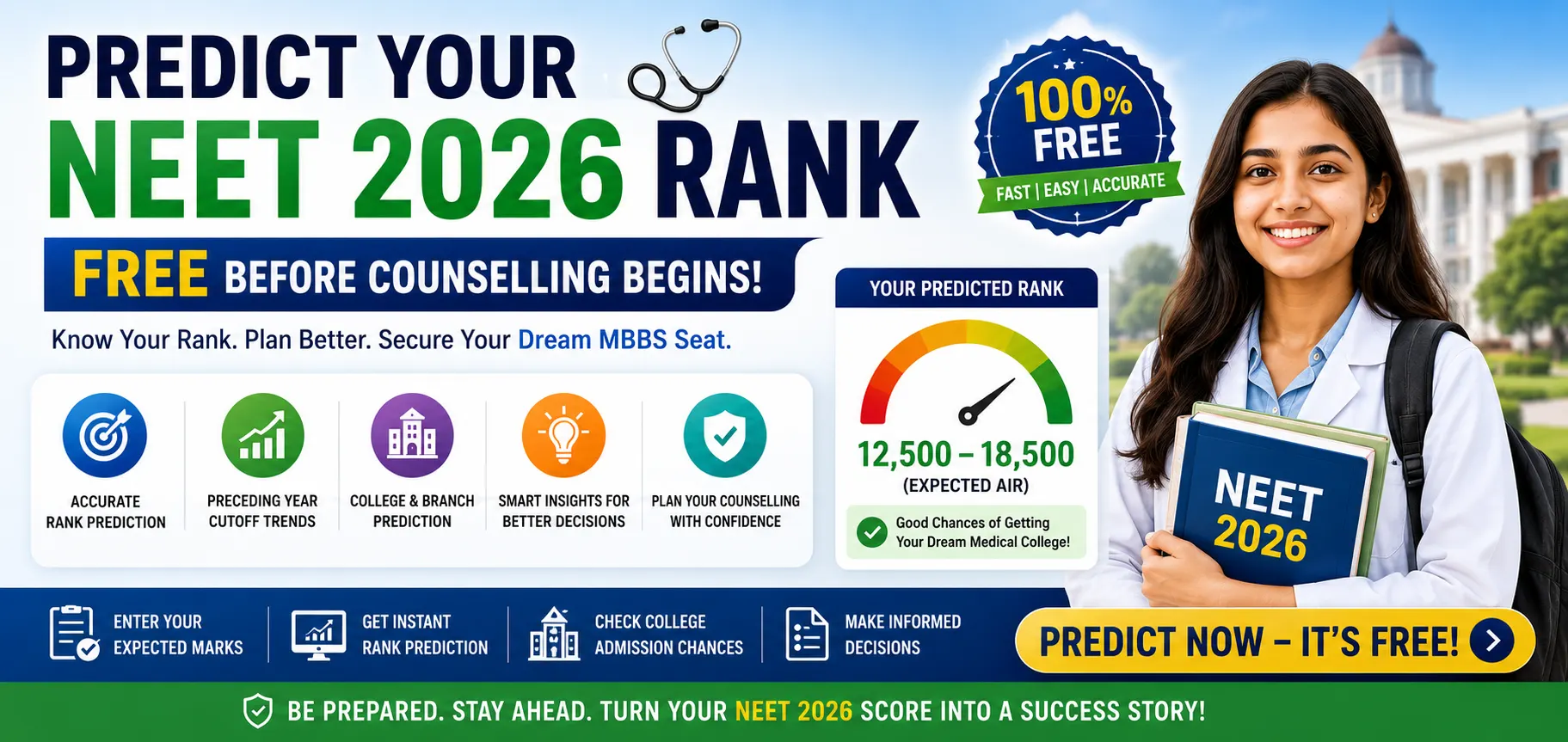
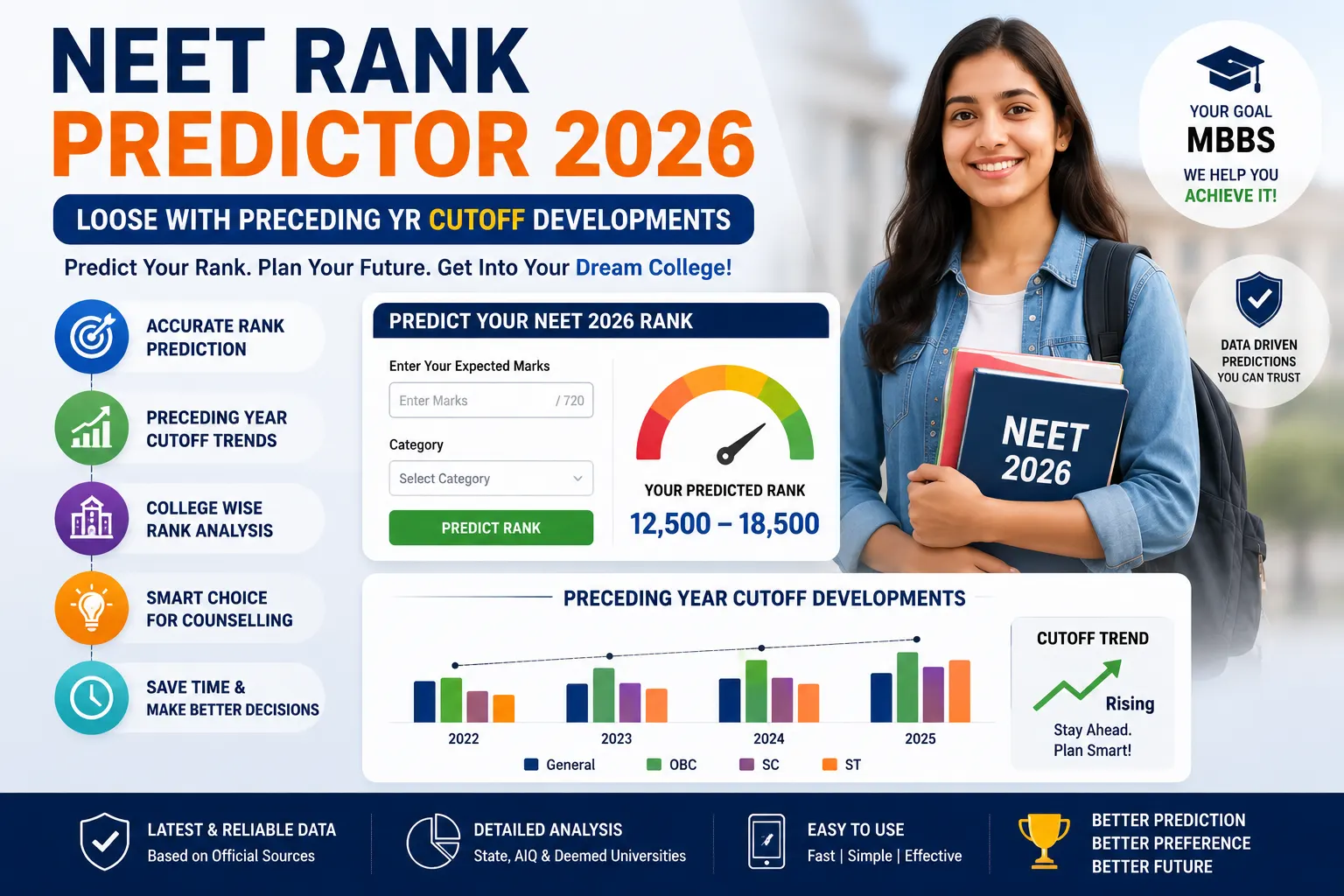
Many students select at random, rather than out of any genuine knowledge. Tools such as a NEET rank predictor allow candidates to predict their realistic chances of getting a particular specialisation and college, through past cut-offs.
These tools enable candidates to:
Make informed choices
Avoid unrealistic expectations
Reduce unnecessary seat rejection
How about we make ‘less bad decisions’, and we can also shrink that waiting list substantially.
NEET Awareness and Transparency as the key ROLE
A concise assistance in navigation through the NEET ecosystem is an important requirement. Knowledge about the seat matrix, counselling process and career scope in a speciality can enable aspirants to set realistic expectations.
Fixing the Medical Seat Paradox
To address the problem of vacant seats even after a decline in cut-offs:
Enhance career advice for less popular disciplines
Introduce more flexible counselling mechanisms
Incentivise underserved specialities and areas
Favour the data-driven tools, such as NEET rank predictors
Align policies of medical education with the national health care requirements
Conclusion
The contradiction between decreasing NEET PG cut-offs and stranded medical seats is a system-based problem that has a lot to do with aspirational choices, counselling restrictions, financial incapacities, and knowledge deficits. In addition to being advocated by regulatory bodies, such as the NMC and WHO globally in relation to balanced healthcare provision it is expected that aspirants implement reasonable judgments.With the help of tools such as neet rank predictor and insights into medical education, India can create a win-win situation that would allow for effective utilisation of postgraduate medical seats and build a strong healthcare workforce.