NEET 2019 Exam Analysis: Structural Changes in Medical Entrance Exams Post NEET 2019
The NEET (National Eligibility cum Entrance Test) is now the single most significant examination for medical aspirants in India. NEET is conducted by the National Testing Agency and qualifies candidates for admission to undergraduate medical courses in government and private medical colleges.
NEET 2019: A Turning Point In India’s Medical Entrance Exam System That was among the first few years when the exam system got completely unified under one national body and brought transparency and equality to medical admissions.
Several major changes in the medical education landscape have occurred since then. The landscape of medical admissions has changed immensely, from greater levels of competition to the regulatory reforms imposed by the National Medical Commission.
NEET 2019 data insights take students preparing for NEET 2026 a step closer to anticipating trends involved as well as complexity levels and need of using tools available online like NEET Rank Predictor that can help them assess their prospects of getting admission into college.
Overview of NEET 2019
NEET 2019 recorded one of the highest participations ever for NEET, with over 15 lakh candidates who applied to take up the exam. The exam covered topics such as Physics, Chemistry and Biology prescribed in the NCERT course.
Key Statistics from NEET 2019
Registered Candidates: Over 15.2 lakh
Candidates Appeared: Around 14.1 lakh
Qualified Candidates: Nearly 7.9 lakh
Maximum Score: 720 marks
These figures showed how fast medical careers were becoming popular in India. That being the fact, only limited MBBS seats were granted each year increasing aspirants competition.
Score Distribution and Rank Trends
NEET 2019 also threw light on one of the significant data points, which was the score distribution pattern.
Students who got more than 650 marks used to have a decent chance of getting into A-grade government medical colleges. But even a slight variance in total marks can make a lot of difference to the rank.
Approximate Rank Trends (NEET 2019)
700+ marks – Top 100 ranks
650–690 marks – Upper 1,000 ranks
600–650 marks – 5,000 ranks
550–600 marks – 20,000 ranks in top
As the competition is tremendously high, more and more students depend on a NEET Rank Predictor to know their expected rank and chances of admission.
NEET Applicants Surge Post 2019
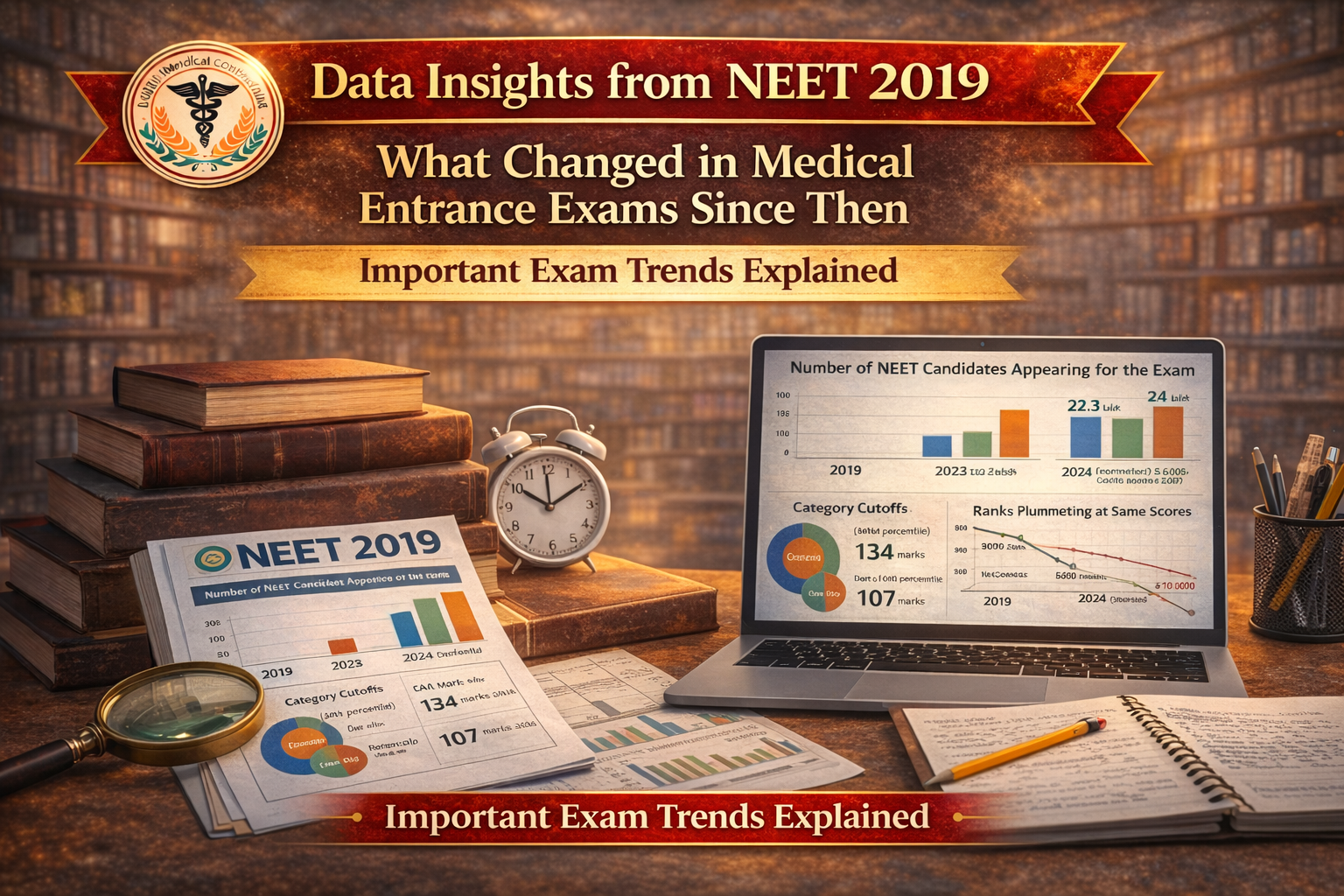
The biggest change since NEET 2019 has been the rapid growth in aspirants.
The number of candidates appearing for the NEET has increased gradually over the years and in the last few years, registrations crossed 20 lakh.
A number of things added to this increase:
Increased awareness about medical careers
Expansion of medical education opportunities
To ensure uniformity in entrance examinations around India
Growing interest in healthcare professions
But, despite the increase in aspirants, the number of seats has not expanded at a commensurate rate.
India to See Increase in Number of Medical Seats
With the rising demand for medical education, the Government of India has launched numerous schemes to cater to students' needs and increase the number of medical colleges and the number of seats.
Later, innumerable number of medical colleges have been opened in various states and also intake in existing institutions has increased.
And in spite of these new MBBS seats, demand continues to outstrip supply by a considerable margin. International options like MBBS in Georgia are explored by a lot of students since.
Reforming Medical Education and the Role of NMC
Another significant change since NEET 2019 is the formation of National Medical Commission in place of Medical Council of India.
Now, the NMC also introduced new reforms for quality and transparency in medical education.
The NMC has several important responsibilities, including the following:
Regulating medical education in India
Approving medical colleges
Setting standards for medical training
Monitoring foreign medical graduate eligibility
These reforms have increased the structure and international integration of the medical education system.
Growing Popularity of MBBS Abroad
A significant number of students prefer studying medicine abroad as a result of high competition and fewer seats in India.
Russia, Kazakhstan, the Philippines and MBBS in Georgia are among many such countries that have emerged on the map of Indian students.
Out of all such options, MBBS in Georgia has become one of the most sought-after destinations because of:
Affordable tuition fees
English-medium medical programs
Internationally recognized universities
Modern infrastructure and facilities
These benefits of studying in Georgia bring in a sway for medical aspirants who qualify NEET, but face difficulty to get admission in any of the Indian private / government medical colleges.
Importance of Global Recognition
International recognition is a key requirement for students wanting to study medicine outside their home country.
WDOMS Listing
The Global List of Medical Schools came from the World Directory of Medical Schools.
Various international licensing examinations are available for universities listed in WDOMS.
WHO Standards
The World Health Organization has a long history of contribution to the advancement of medical education worldwide.
There are global recognition of medical graduates in some historical cohort.
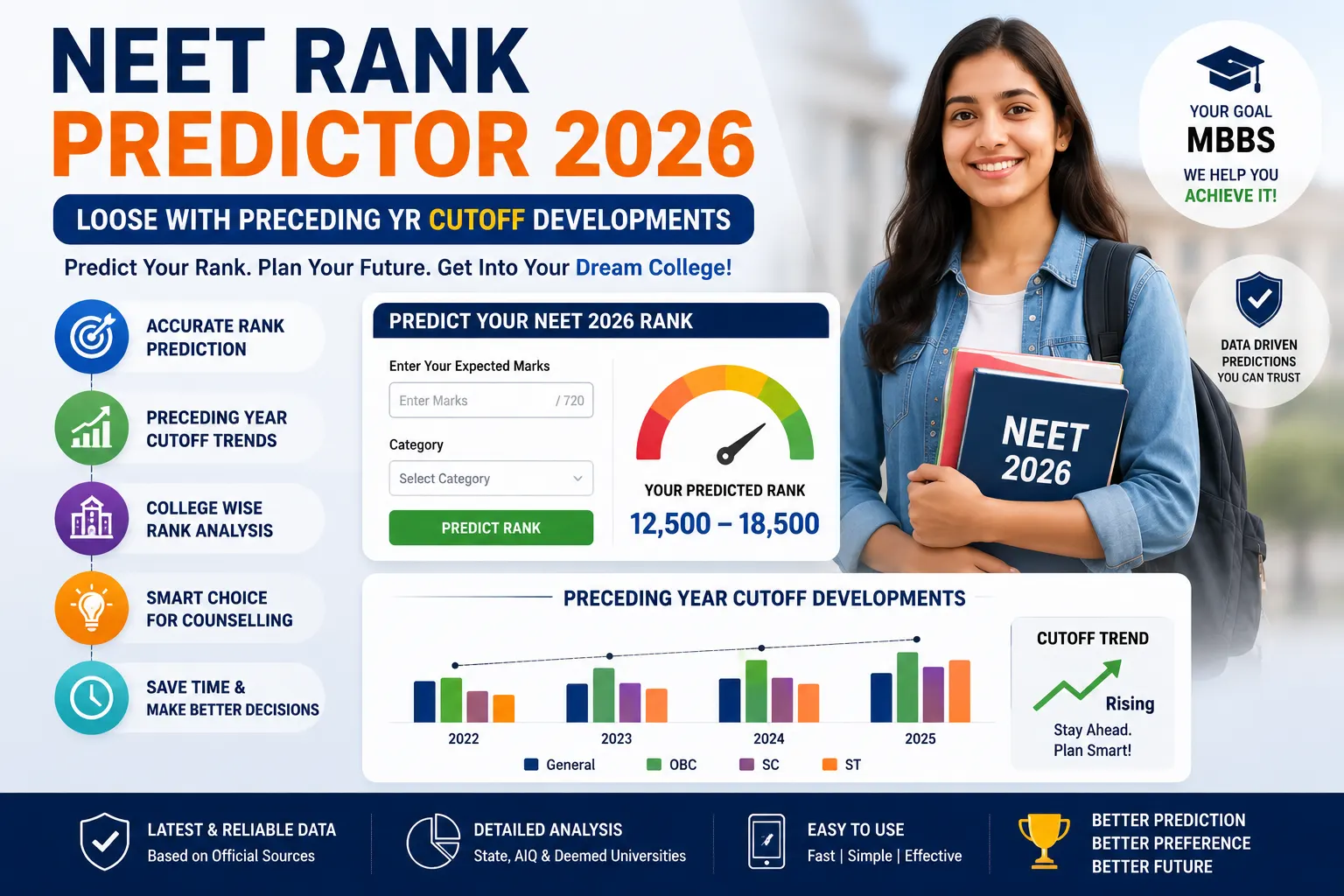
Importance of NEET Rank Predictor
Students need better tools to evaluate the possibility of them obtaining a medical seat due to increasing competition.
NEET Rank Predictor is an excellent tool that enables the students to predict their rank using their expected score in NEET exam and also by referring to the previous year data.
Benefits include
Predicting probable All India Rank
測算進大學的醫學線上政府醫療人數
Exploring private college options
Evaluating study-abroad opportunities
Such utensils were of great use for NEET aspirants.
Shifts in Medical Entrance Exams Ahead
To Transform the medical career, medical education system and policy in India. National Exit Test (NEXT) is one of the key reforms which are going to come into work.
NEXT will eventually serve as:
Licensing examination for medical graduates
An independent entrance exam for postgraduate medical courses
It is also likely to replace the Foreign Medical Graduate Examination (FMGE).
Such reforms are envisioned to ensure uniform evaluation of medical graduates within India and abroad.
Key Lessons from NEET 2019
NEET 2019: Lessons to be learnt for current aspirants
Competition continues to increase
Each year, the exam is getting more challenging as it sees a significant increase in applicants compared to 2019.
Government seats require high marks
Above 600 marks is the target for students seeking government medical colleges.
Strategic preparation is essential
Conceptual clarity, mock tests and time management are the key factors for success among students.
Alternative options are important
However, for those who are unable to get seats in India should look out alternative options like pursuing MBBS in Georgia.
Conclusion
NEET 2019 was a landmark moment in the history of medical entrance examinations India. Such statistics reflect ever-increasing competition among the available medical aspirants as well as medical education.
There have been many developments since then, like National Medical Commission regulatory reforms, increase in medical seats and interest to study medicine abroad.
NEET aspirants today should be aware of all such trends and utilize tools like the NEET Rank Predictor to strategize their admission plan efficiently.
Candidates are also advised to check that any international medical university, in fact they select is listed with the world directories such as WDOMS and meets global standards regulated by organizations like WHO.
As competition for admission to medical schools is so intense, it is possible to get there with meticulous planning and making the right choices.