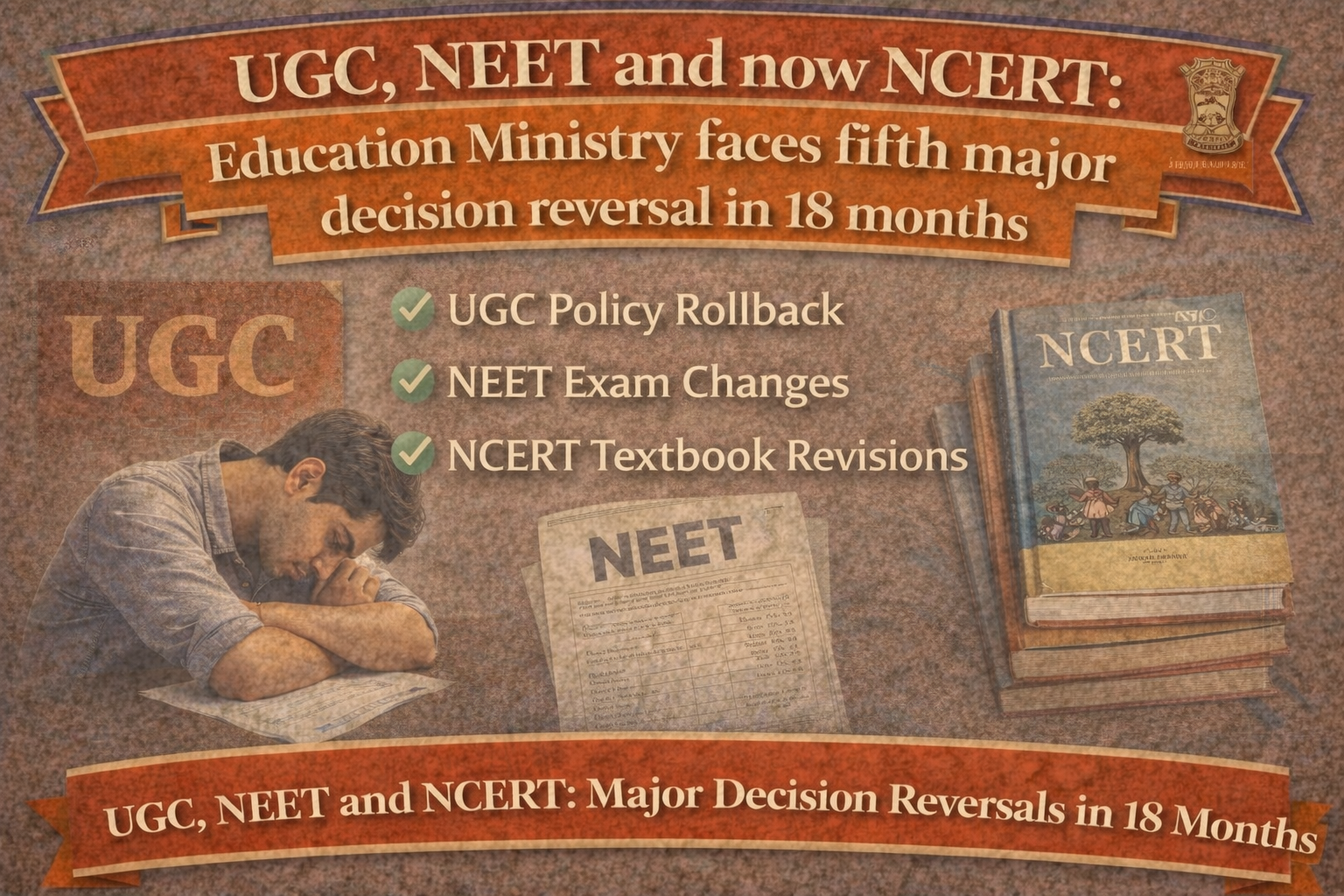
February 26, 2026: New Delhi—Once again the Ministry of Education has become the target of controversy when experts have termed this the fifth major policy about-face in just 18 months.
Following past controversies related to the University Grants Commission (UGC) and the NEET (National Eligibility cum Entrance Test), we are now undergoing turbulence in the NCERT (National Council of Educational Research and Training) curriculum directives—a situation that illustrates an unceasing struggle in bringing about consistent education governance in India.
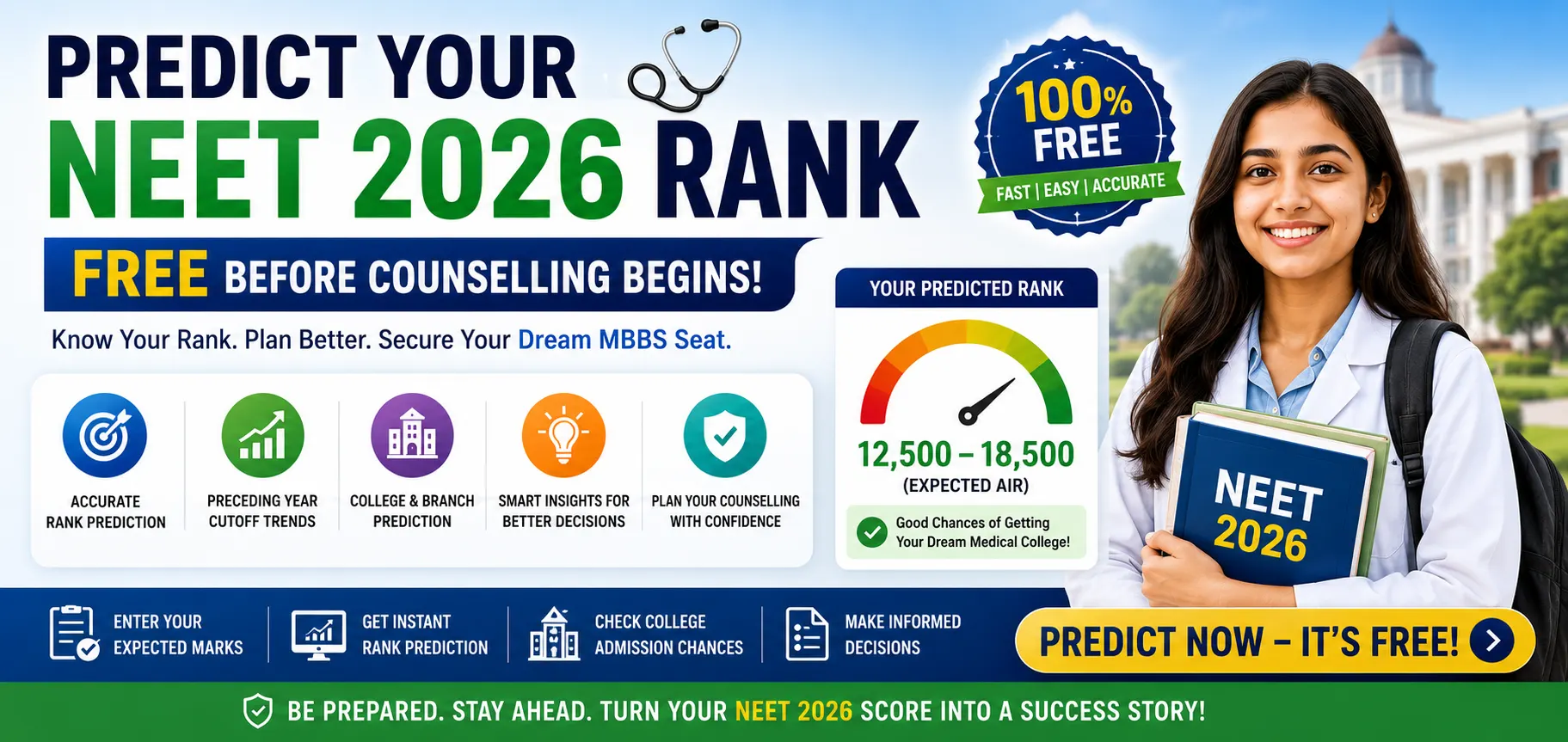
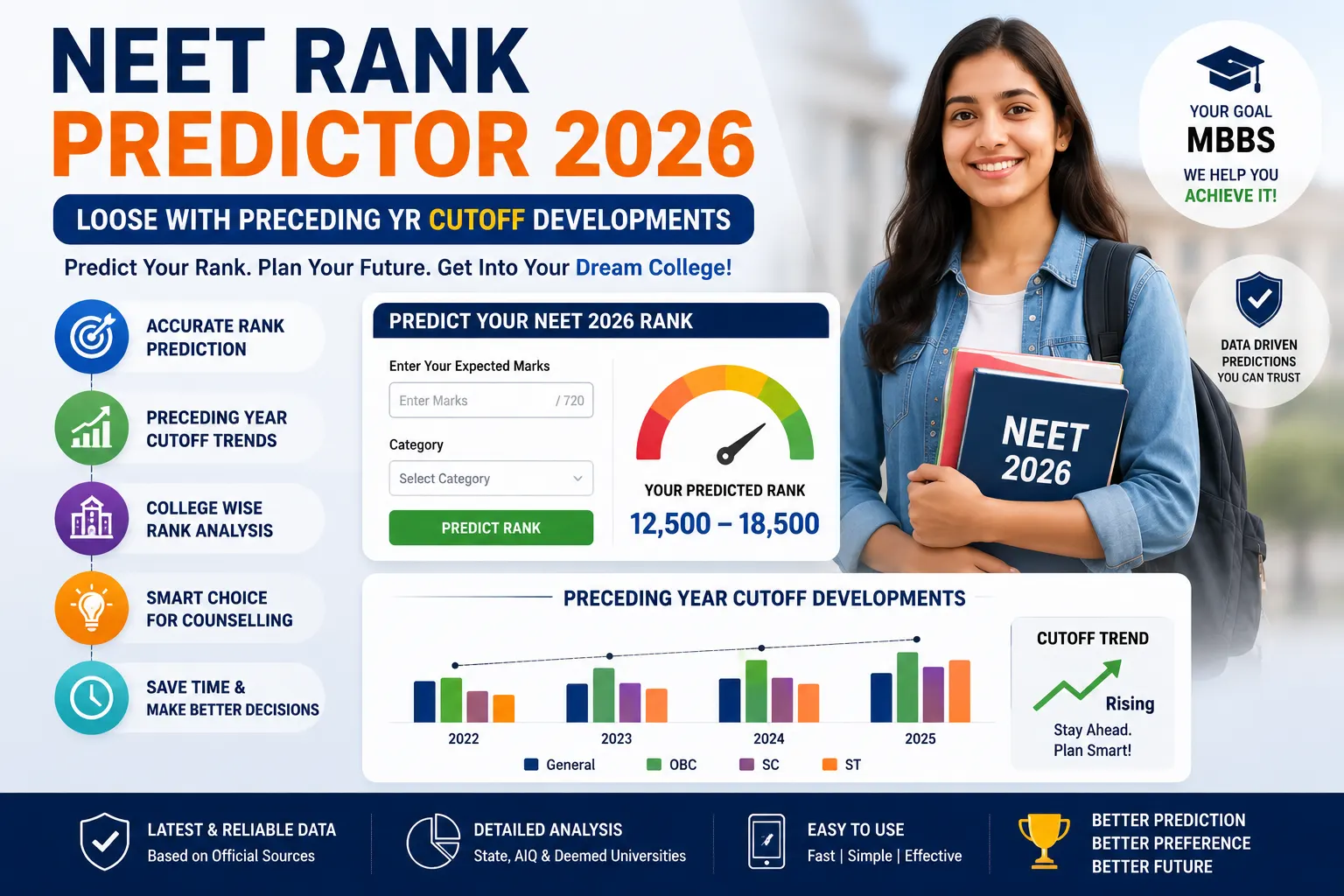
With the uplift to NEET and other medical entrance exams, school authorities and several universities have introduced changes in their eligibility criteria twice this past month alone. Coaching centres direct students to websites like NEET RANK PREDICTOR to help them prepare well for their medical career journey across India but what remains conjectural is whether or not these systematic changes should be taken into consideration by students who are already undergoing these preparations.
Policy Reversals: A Timeline
In the last 18 months, the Ministry of Education has seen several sudden policy changes:
UGC Regulation – Revised Modules of Minimum Quality Standards, Assessment Criteria for accreditation and their autonomy
NEET Changes – New testing format, qualifying marks & eligibility criteria for UG medical admissions
Changes in NCERT Curriculum – Suddenly introduced new textbooks, removed chapters and changed evaluation rubrics.
Reversal of the scholarship and grant schemes impacting the Tier-2/Tier-3 institutionsHigher Education Funding Changes
Policies for vocational education – Unexpected push-and-pull of balance between skill-based learning programs.
Students and educators have cautioned that such repeated reversals disrupt the continuity of learning and render long-term academic planning nearly impossible.
Impact on Medical Aspirants
Coaching centers complain of being unable to revise their teaching material in line with changing syllabus.
NEET RANK PREDICTOR: Students aren't always confident that results will be fair.
Foreign medical programs, such as MBBS IN GEORGIA, do have Indian students among their student pools, which makes them a handy factor for them.
For an Indian student aspiring to study abroad, consistency in the Indian education system allows universities and accreditation bodies, such as international agencies like WDOMS and frameworks cited by the WHO, to cross-verify applications for medical programs globally.
Stakeholder Reactions
Students and Parents
Students angered by constant revisions, which can directly impact exam preparation strategies, college choice and overseas study scheduling. Parents highlight the mental pressure of having to keep adjusting up until this point due to changing directives, while aiming for competitive examinations like NEET.
Educators
Coaching institutes and teachers also say frequent changes to the NCERT syllabus has created added stress due to wastage of resources and it being up to redoing lesson plans multiple times.
Medical Licensing Experts
Professionals have expressed concern that national-level discrepancies could affect NMC recognition and licensure pathways for students who wish to practice medicine either domestically or internationally. The WHO framework includes programs that are stable and confer recognised and efficient degrees, such as in WDOMS.
Why This Matters
Frequent reversals on policy have spillover effects across numerous fields:
Exam Preparedness
The students who are depending on predictive tools like NEET RANK PREDICTOR keep reappearing.
Higher Education Planning
Uncertainty relating to eligibility and curriculum will have direct implications for college admissions, scholarships and study abroad.
Internationally Recognized
WHO reference international standards and validation in the WDOMS listing process requires constant, appropriate curricula.
In the absence of stability, the credibility of Indian educational qualifications may come into question internationally impacting students seeking an opportunity to practice medicine either in India or abroad.
Expert Opinions
Education analysts say that the Ministry should think of long-term, transparent policies to regain credibility. Not only hinders the learning process, sudden reversal complicates global student mobility for students undertaking MBBS IN GEORGIA or any other globally recognized streams.
The school-based education policy expert Dr. Anjali Mehta observed:
Such interventions need to be consistent within national curriculum, exams, and licensing frameworks such as NMC,” he said. Frequent reversals disorient students trying to assess their options, both at home and abroad.”
Next Steps: What Students Can Do
In the meantime, students should:
Keep an eye on updates from NCERT, UGC, and NMC.
Do NOT depend too much on tools like NEET RANK PREDICTOR that are based on last year's trends, they will change a lot according to new syllabus updates.
Students intending to study abroad can choose programs recognized in WDOMS and meeting WHO standards.
Keep a flexible study plan in case the curriculum changes.
Conclusion
This is the Education Ministry’s fifth policy reversal in 18 months and this time it comes with NCERT as its focus — that a urgent need for stable, consistent, and transparent educational governance must be established in India. Even if these changes were made with the intention to improve academic quality or even fairness, vacillation leads to erosion of faith among students, exam preparedness and international recognition of Indian medical aspirants.
In a world interconnected through education, in an age where NEET RANK PREDICTOR aids students mitigate the effects of uncertainty as they seek validation on international platforms like WDOMS and WHO to ensure that their future is secure relative to other peers planning careers in medicine or science.