Patna, Bihar — February 27, 2026
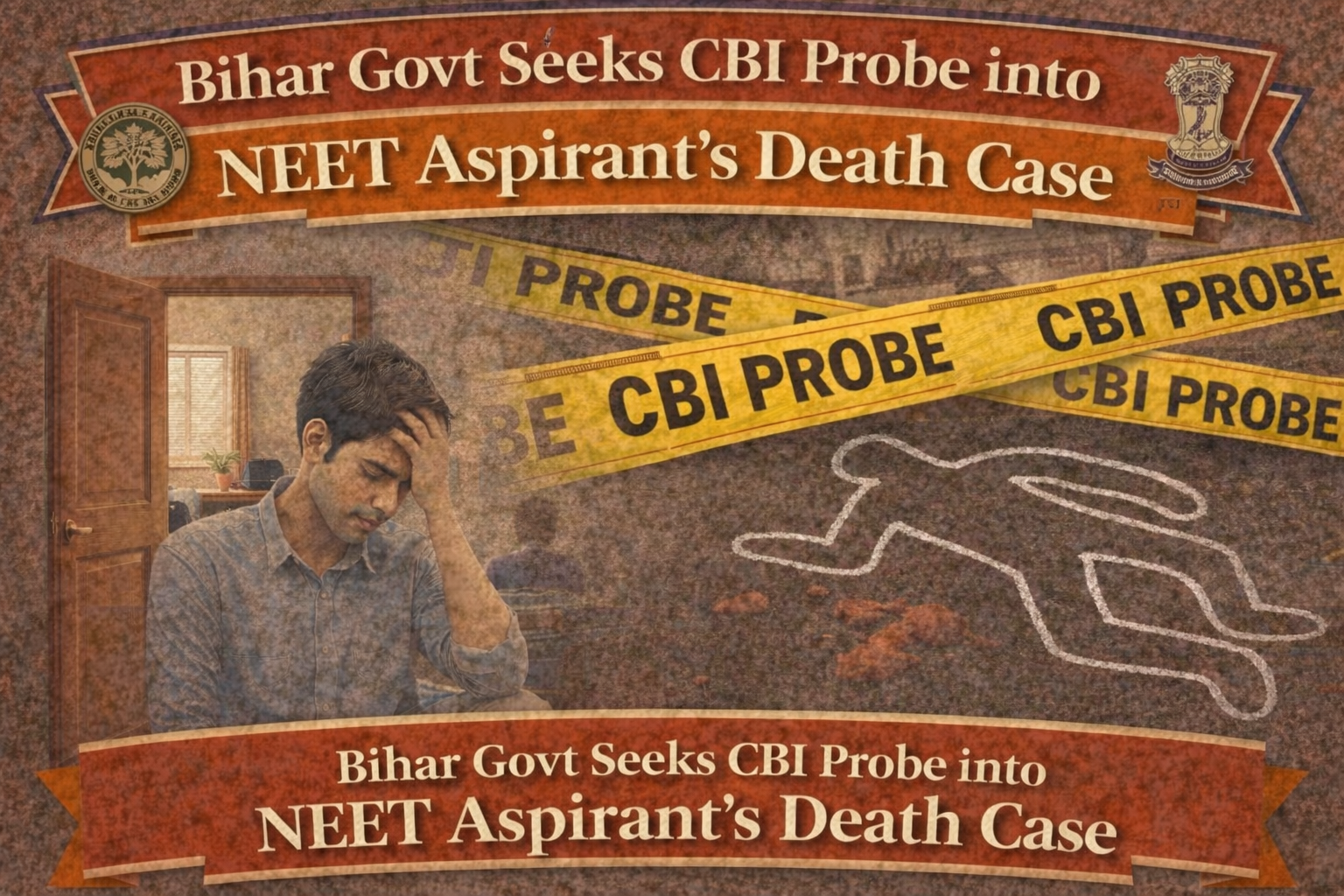
After the shocking incident of death of a NEET aspirant which had fueled outrage and scrutiny on issues such as student safety, academic pressure, and systemic accountability; The Bihar government has officially requested for a Central Bureau of Investigation probe into the matter.
The incident, which reportedly involved a young medical entrance aspirant preparing for the National Eligibility cum Entrance Test (NEET), has sparked statewide debate. The authorities have also said that because of the sensitive nature of the matter, a CBI inquiry would ensure transparency and fair examination of facts.
What Happened?
The dead student had reportedly been training hard for NEET, one of the most competitive entrance tests for medical students in India, preliminary accounts said. Early reports indicated that intense academic pressure may have played a role in the incident, although officials clarified that it would only become clear what caused it after an exhaustive investigation.
The state police also opened an inquiry right after the incident was reported. But after family members, student groups raised appeal for handing over the case to CBI so that an independent and thorough probe could be conducted into it, Bihar government had recommended transferring the matter to CBI for investigation.
Why a CBI Investigation?
The call for a CBI probe comes in the backdrop of:
Key Concerns Raised
Accusations of negligence or external pressure
Civil society groups are calling for transparency
Student protests highlighting exam-related stress
Political debate over accountability
A probe by CBI would remove questions of procedural lapses and ensure there was no local interference in a fair investigation, the officials said.
Rising Pressure Around NEET
NEET is among the most competitive of India’s exams, which attract 20 lakh candidates a year for few MBBS and BDS seats. Despite the use of predictive tools like NEET RANK PREDICTOR to gauge admission chances, intense competition and uncertainty still add stress to aspirants.
“NEET paved a great way to ensure standardisation of the admission process into medical colleges, but it has also paved way for several unwell consequences because high-stake examinations make students anxious and take a toll on their mind,” said Probal Dutta Gupta, an educationist.
Stress on mental health during competitive examinations
Psychologists specialising in education have noted that punishing academic competition, family expectations and financial pressure can add up to crushing psychological demands. Recent incidents in various states have raised discussions on:
Areas of Concern
Counselling support in coaching hubs
Helpline accessibility for aspirants
Regulation of coaching institutes
Balanced academic policies
The other incident is the tragic death in Bihar which has once again raised the question whether we need structural reforms in these entrance examination systems.
Regulatory Framework and Oversight
In India, medical education is controlled by the NMC (National Medical Commission), which regulates NEET-based merit systems for undergraduate and postgraduate medical admissions.
The internationally accepted medical benchmarks used for comparing the Indian standards include institutions accredited by WDOMS (World Directory of Medical Schools) and frameworks mentioned by the World Health Organization (WHO). Maintaining credibility of global medical education centres requires a careful balance between academic rigour and students welfare.
While NMC mandates merit, experts say, in the excitement about selection process ensuring that studies don’t punish students and require all institutions to be transparent.
Political and Public Reactions
While the opposition termed it a failure of systemic students’ support mechanisms, representatives from the ruling party stressed that a CBI probe does not show any reluctance to seek justice.
Student Organisations in Bihar Are Demanding:
Transparent findings from the CBI
Organisational responsibility in the event of negligence
Improved mental health infrastructure
Regulation of coaching centre practices
The deceased's family has praised the move, saying it gives them hope that an independent agency will find out what led to the tragedy.
The Bigger Picture
This case comes amid a growing national discussion of:
Broader Issues
Academic stress in competitive exams
Safety measures for hostel-based students
Coaching industry oversight
Examination reform
Though NEET still remains the standard route to medical admissions according to NMC, policymakers face increasing pressure to make sure that academic excellence does not go hand in hand with students’ well-being.
What Happens Next?
The Centre is likely to revisit Bihar’s demand for a CBI probe. Upon approval, the central agency will:
Re-register the case.
Examine evidence and witness statements.
Investigate institutional or external factors.
Submit findings to the court.
It is as yet unclear when the work will be done, but authorities have promised they're working quickly.
Conclusion
The Bihar government’s decision to request a CBI inquiry into the death of the NEET aspirant is a reflection of how grave the matter can be. “Though tests like NEET are significant in building India’s future doctors under the aegis of NMC, it is disheartening to see a human life get lost just because the academic systems haven’t kept pace with needed mental health safeguards,” said Dr B N Gangadhar, Koshy Hospital.
While striking a balance between meritocracy and compassion, what emerges from this investigation can have policy implications related to the next generation policies around entrance examinations, student counseling frameworks and institutional accountability standards that can be guided by national needs along with comparison against a global benchmark as defined under WHO and WDOMS.